News
12 Key Changes in the New Electoral Act, 2026 – Senator Bamidele Explains
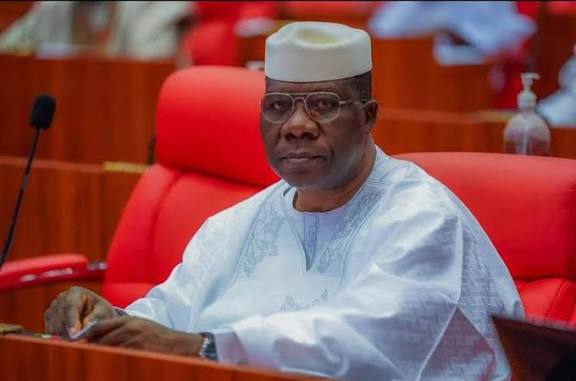
Senator Opeyemi Bamidele has outlined what he describes as twelve fundamental changes introduced by the newly signed Electoral Act, 2026, stating that the legislation represents a significant shift from previous electoral frameworks.
L
President Bola Tinubu signed the bill into law on Wednesday at the Presidential Villa, Abuja, effectively replacing the 2022 Electoral Act.
According to Bamidele, who spoke on the implications of the new law, the passage followed two years of rigorous engagement with stakeholders including civil society organisations, the Independent National Electoral Commission (INEC), and the Office of the Attorney-General of the Federation.
Below is a summary of the twelve key provisions highlighted by the lawmaker:
1. Dedicated Funding for INEC
Section 3 establishes a dedicated fund for INEC to enhance its financial autonomy. The Act mandates that funds due to the Commission for any general election must be released no later than six months before the election date.
2. Compulsory BVAS Usage
Section 47(2) makes the use of the Bimodal Voter Accreditation System (BVAS) mandatory for voter verification. If the device fails and cannot be replaced, Section 47(3) mandates that the election in that polling unit be cancelled and a new one scheduled within 24 hours.
3. Separate Queues for Cultural Observance
Section 49 authorises presiding officers to separate queues for male and female voters in areas where cultural norms discourage mingling, a move aimed at boosting voter turnout in such communities.
4. Assistance for Persons with Disabilities
Under Section 54, presiding officers are required to provide assistance to voters with visual impairments or other disabilities, including the use of Braille, sign language, or electronic devices. Party agents are barred from accompanying voters into voting compartments.
5. Mandatory Electronic Transmission of Results
Section 60(3) guarantees the mandatory electronic transmission of results to the INEC Result Viewing Portal (IReV). To prevent sabotage, Section 60(6) prescribes a six-month imprisonment or a fine of N500,000, or both, for presiding officers who frustrate the process without justifiable cause.
6. Streamlined Inauguration of Court-Declared Winners
Section 72(2) provides that a Certified True Copy of a court order shall be sufficient for the swearing-in of a candidate declared winner by the Court of Appeal or Supreme Court, should INEC fail to issue a certificate of return.
7. Sanctions for Withholding Election Documents
Section 74 authorises Resident Electoral Commissioners to release election documents within 14 days of a request. Failure to comply constitutes an offence punishable by a minimum two-year imprisonment without an option of fine.
8. Regulation of Party Primaries
Section 77 mandates political parties to maintain and submit a digital register of members to INEC 21 days before primaries. Parties that fail to do so will not be eligible to field candidates.
9. Adoption of Direct Primaries and Consensus
Section 84(2) removes the indirect primaries model, retaining only direct primaries and consensus as methods for electing candidates. This is intended to reduce money politics and empower party members.
10. Upward Review of Campaign Spending Limits
Section 92 increases spending limits for elections:
· Presidential: from N5bn to N10bn
· Governorship: from N1bn to N3bn
· Senate: from N100m to N500m
· House of Representatives: from N70m to N250m
· State Assembly: from N30m to N100m
11. Stricter Accountability for Party Finances
Under Section 93, political parties must submit audited returns of election expenses to INEC within six months, signed by the party chairman and auditors. Non-compliance attracts a fine of N10 million.
12. Penalties for Vote Buying and Manipulation
Section 125 prescribes a two-year imprisonment and fines ranging from N500,000 to N2 million for offences related to vote buying, impersonation, and result manipulation.
Bamidele noted that the amendments extend beyond the widely debated issue of result transmission, introducing broad reforms aimed at deepening internal democracy and improving electoral integrity.