News
After Demolitions from Oworonshoki to Ikota, Lagos Residents Demand Answers and Aid
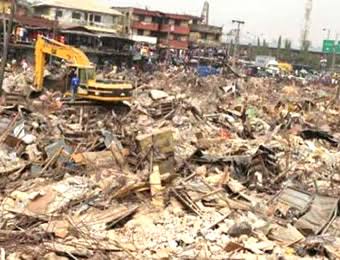
A sweeping urban renewal drive by the Lagos State Government has rendered hundreds homeless and sparked widespread anger, as demolitions targeting what officials call illegal structures tear through communities from Oworonshoki to high-end estates in Eti-Osa.
Communities in Rubble
In Oworonshoki,displaced families now sleep on mats among rubble, their belongings scattered. Residents like Kafayat Omoboriowo voice raw anger after bulldozers leveled over 100 homes in October, along with several schools and churches. “They have pushed us outside. This is where we sleep,” she exclaimed.
The scene is repeated in Ikota Villa and Oral Extension Estates, where buildings were partially or fully demolished to expand canals, and at the International Trade Fair Complex in Ojo, where warehouses were razed. Homeowners report receiving little to no warning and question the timing, having invested for decades in areas they say government once encouraged them to develop.
Government Justification: Illegal Structures and Flood Prevention
State officials defend the actions as necessary for creating an orderly,flood-resilient megacity. Gbolahan Oki, Permanent Secretary for Physical Planning, stated the demolished buildings lacked permits, despite a prior amnesty period. Environment Commissioner Tokunbo Wahab cited the need to clear drainage obstructions to prevent catastrophic flooding.
Widening a Crisis: Housing Deficit and Systemic Failures
Critics argue the demolitions exacerbate Lagos’s severe housing crisis,estimated at a deficit of 3.4 million units. Toye Eniola of the Association of Housing Corporations of Nigeria warns that rendering families homeless will increase social strain and crime.
A key point of contention is the government’s own role. With over 50% of Lagos buildings estimated to lack approval, questions arise about regulatory failure. Residents describe the old permit process as cumbersome and corrupt, while officials claim people build illegally out of ignorance or defiance.
Compensation Dispute
While the government states it has compensated some owners in Oworonshoki with sums ranging from N300,000,affected residents like youth leader Fatai Ganiyu call these amounts insulting and allege the process is not transparent. “Will N300,000 rebuild a house? It doesn’t even buy land,” he said.
As Lagos pursues its “smart city” vision, the human cost of its demolition drive highlights a stark conflict between urban planning ambitions and the survival of its vulnerable residents.