News
Shi’ite Members Protest in Lagos, Kano, Kaduna Against Killing of Iran’s Supreme Leader, Khamenei
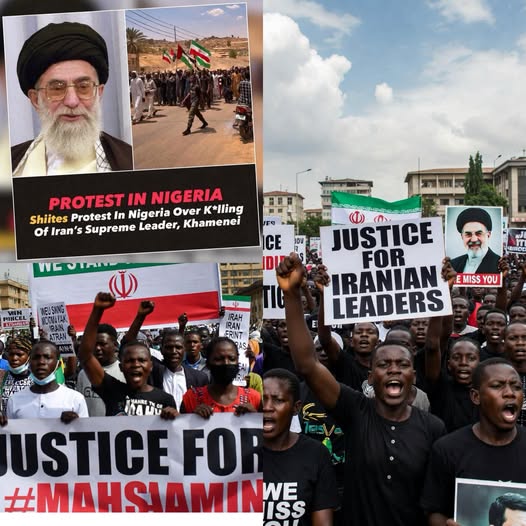
Members of the Islamic Movement in Nigeria (IMN) have launched a wave of protests across major cities, including Lagos, Kano, Kaduna, and Abuja, following the confirmed death of Iran’s Supreme Leader, Ayatollah Ali Khamenei.
Demonstrators took to the streets on Sunday and Monday, carrying portraits of the late leader and chanting slogans against the United States and Israel in a show of solidarity with the Iranian government.
In Lagos, the South West wing of the IMN staged a peaceful march through the Maryland axis during the early hours of Monday. Protesters displayed placards and banners denouncing the joint US-Israeli military operation as an illegal “invasion” and condemning the targeted assassination of Khamenei, who had ruled Iran for over 35 years.
Despite the high tensions, reports indicate the gatherings remained orderly, with no immediate accounts of violence or major disruptions to public order.
Speaking during the demonstrations, IMN leaders called on the Nigerian government to reject the presence of US military personnel within the country. Muftau Zakariya, the South West coordinator for the movement, argued that US interventions internationally, citing Venezuela as a recent example, have consistently prioritized economic gain over the sovereignty of other nations.
Zakariya further alleged that foreign involvement has exacerbated insecurity in Nigeria, claiming that recent attacks in Kwara State were linked to increased US activity in the region.
Another movement leader, Muhammadu Bashir, stated that the protests serve as a formal registration of their grief and outrage over the killing of the Iranian leadership.
He emphasized that the demonstrations would be sustained across the country but maintained they would remain peaceful.
The protests in Nigeria reflect a broader global outcry among Shi’ite communities after Iranian state media confirmed Khamenei’s death during the large-scale military offensive that began on February 28, 2026.
As Iran enters a 40-day period of national mourning, the region continues to grapple with the fallout of the strikes, which have triggered retaliatory attacks and significant casualties across the Middle East.