Business
South African Investment Giants Eye Stakes in Dangote Refinery
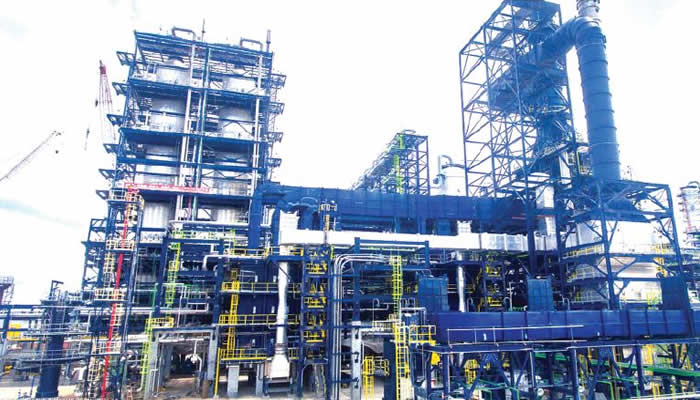
Leading South African pension and investment institutions are considering investing in the Dangote Petroleum Refinery and Petrochemicals following a high-level tour of the facility in Lagos.
A delegation comprising representatives from the South African Government Employees Pension Fund, the Public Investment Corporation, and Alterra Capital Partners recently visited the Dangote Refinery and Dangote Fertiliser Limited in Ibeju-Lekki.
The GEPF, which manages retirement benefits for over 1.8 million public sector workers in South Africa, described the refinery as proof that Africa can execute transformational infrastructure projects. The chairperson of the fund stated that what has been built at the facility is reshaping how the world perceives African industrial capability.
He added that projects of such magnitude have long been associated with other parts of the world, but the Dangote Refinery demonstrates that with visionary leadership and long-term capital, that perception no longer holds.
The CEO of the PIC, which manages approximately $230 billion in assets largely on behalf of South Africa’s government employees, described the refinery as one of the most transformative industrial projects on the continent. He noted that his institution is actively seeking long-term partnerships aligned with infrastructure development, industrialisation, and economic transformation across Africa.
He further stated that there is strong strategic alignment between Dangote’s industrial agenda and how his portfolio is being positioned, adding that his organisation looks forward to exploring meaningful avenues for collaboration.
In response, the President of the Dangote Group said the planned listing of the refinery on the Nigerian Exchange is designed to democratise wealth creation and give Africans direct access to participate in the continent’s industrial transformation.
He emphasised that Africa’s next phase of economic growth must be anchored on large-scale industrial projects capable of creating jobs, strengthening domestic production capacity, and generating broad-based prosperity.
The industrialist noted that the refinery project reflects the scale of untapped opportunities within Africa’s energy market, particularly as most African countries remain dependent on imported refined petroleum products despite growing demand.
He also revealed that demand for products such as polypropylene, aviation fuel, and refined petroleum has exceeded earlier projections, reinforcing the commercial viability of the refinery and shaping future expansion plans. He added that even with current production levels, the company is practically living hand to mouth due to extremely high market demand.