
News
Akwa Ibom LG Chairman Commends Gov. Eno’s Educational Reforms
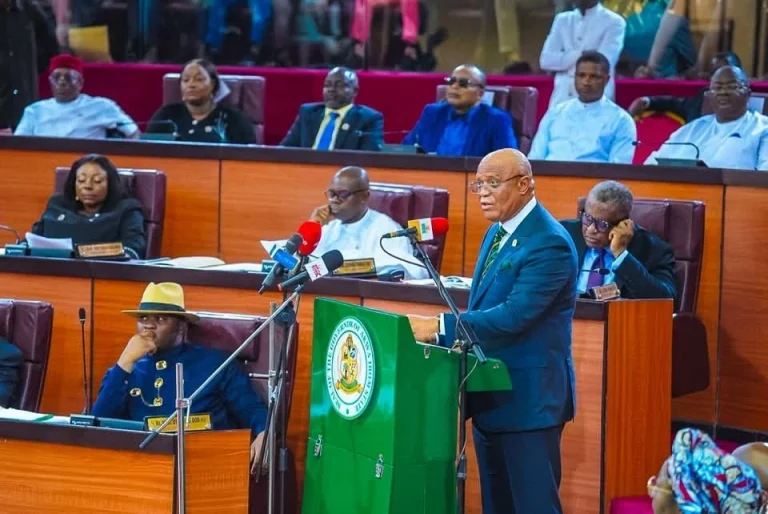
The Chairman of the Uyo Local Government Area, Dr. Uwemedimo Udo, has praised Akwa Ibom State Governor Umo Eno for his ongoing efforts to upgrade educational infrastructure and provide modern learning facilities across the state.
Dr. Udo gave the commendation on Saturday during the official commissioning of the newly reconstructed QIC Government Model Primary School in Oku. He described the project as a vital intervention that will positively influence generations of pupils and benefit the host community.
Originally established in 1914 by Qua Iboe Church missionaries, the school has undergone its first major infrastructural overhaul in over a century. The newly upgraded facility features 19 modern classrooms, an Information and Communication Technology (ICT) lab, a sickbay, administrative offices, staff quarters, and other standard amenities.
Speaking at the ceremony, Dr. Udo who is an alumnus of the school and the state chairman of the Association of Local Governments of Nigeria (ALGON) pledged that the local council would take full responsibility for the upkeep and security of the institution. He announced that the local government has approved the deployment of dedicated security guards and budgeted for maintenance equipment to ensure the school grounds are kept clean without requiring manual labor from the pupils.
Additionally, Dr. Udo forwarded a request from the Oku clan leadership asking the state government to establish a public secondary school in the area to accommodate pupils graduating from the primary school.
Representing Governor Eno at the event, the Political Adviser to the Governor, Dr. Godwin Ntukude, stated that the administration remains dedicated to delivering community-focused projects under its ‘ARISE Agenda,’ emphasizing that investing in education is central to the state’s human capital development.
The State Commissioner for Education, Prof. Ubong Umoh, noted that the comprehensive reconstruction, coupled with a current teacher-to-pupil ratio of 1:25, is expected to significantly improve learning standards and academic outcomes in the school.
The commissioning ceremony was attended by members of the State Executive Council, local government officials, traditional rulers, and community stakeholders.


