News
South-East Youth Stakeholders Endorse SEDC Leadership, Demand Greater Federal Representation
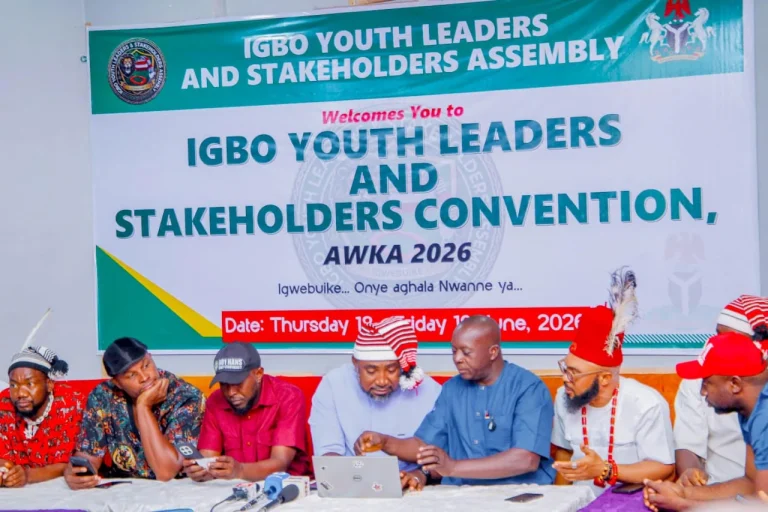
Youth leaders and socio-cultural stakeholders from the seven Igbo-speaking states have declared their support for the South East Development Commission (SEDC) while calling on President Bola Tinubu to expand federal appointment opportunities for young professionals from the region. The resolution was reached during the Igbo Youth Leaders and Stakeholders Convention held in Awka, the Anambra State capital.
Speaking at the convention, Convener Chukwuma Okpalaezeukwu commended the federal government for establishing the SEDC, characterizing the commission as a vital mechanism for overcoming long-standing developmental deficits in the region. While praising ongoing federal road construction and infrastructural interventions, delegates emphasized that true regional integration requires bringing young Igbo talent into national governance.
A communique issued at the conclusion of the convention highlighted several key resolutions aimed at regional advancement, noting that public scrutiny of the SEDC is essential for good governance and urging the commission to maintain open channels with regional stakeholders.
Furthermore, delegates adopted a proposal to establish an Integrated Youth Development Master Plan for the South-East, which will operate as a renewable five-year strategic action plan prioritizing regional employment, technical education, entrepreneurship, and economic productivity.
The convention also explicitly rejected recent external demands for the removal of the SEDC Managing Director and Chief Executive Officer, Mr. Mark Okoye, maintaining that leadership continuity is critical to ensuring institutional stability during the commission’s foundational phase.
The stakeholders stated that the call for removal is not in the best interest of the region at this time, as the commission is still laying its foundation and needs stability to successfully deliver on its developmental mandate.
Addressing the security challenges in the South-East, the stakeholders commended regional governors for their ongoing counter-insecurity initiatives but urged an intensification of strategies to guarantee lasting peace. The youth leaders reaffirmed their readiness to cooperate with both state and federal law enforcement agencies to foster a secure environment capable of attracting sustainable commercial investments.
The joint communique was officially endorsed by leaders across various youth and socio-cultural bodies, including representatives from the National Youth Council of Nigeria (NYCN) across Abia, Anambra, and Ebonyi states, the National Association of Nigerian Students (NANS), and the State Presidents’ Forum of Ohanaeze Ndigbo Worldwide.