News
Abia State Commits N5 Billion to Civil Service Training and Development in 2026
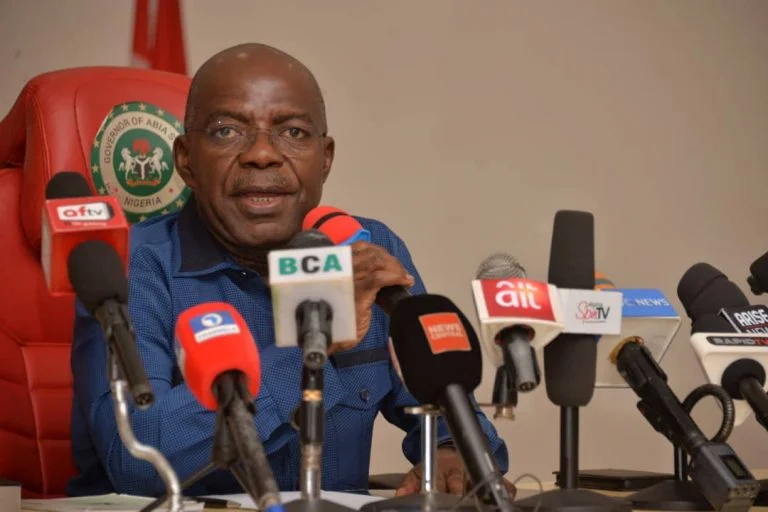
In his New Year address on Thursday, Governor Alex Otti of Abia State announced a N5 billion allocation for the training and development of state civil servants in 2026. He emphasized that sustained public sector reform hinges on the capacity of institutions to effectively fulfill their duties.
The Governor outlined that his administration has been implementing a new work ethic across ministries, departments, and agencies, supported by various incentive measures. He stated that beyond workforce welfare, the government is investing in programs to enhance employee competence with modern tools and systems.
“Arrangements have been concluded to establish a dedicated centre for the training and retraining of staff from various public sector establishments,” Otti said. He added that the new year will see a revised deployment system to ensure individuals are assigned to roles where they can perform effectively and add value.
This policy, he noted, is intended to strengthen the administration’s ability to achieve results linked to the state’s socio-economic growth.
Furthermore, Governor Otti pledged to build on infrastructure developments from the past 31 months. He focused on ongoing road projects aimed at reducing transport costs, lowering production expenses, creating jobs, and improving efficiency.
He highlighted the state’s new mass transit scheme, which uses energy-efficient buses, as a key initiative to cut commuting costs. The goal is to deploy 100 electric buses on major routes by the end of 2026.
“2026 will also see new levels of commitment to the development of critical transport infrastructure,” Otti stated, pointing to the expected completion of multimodal transport terminals and strategic roads.
These projects are designed to facilitate the smoother movement of people, agricultural goods, and industrial materials.
The overarching objective, according to the Governor, is to encourage investment, generate employment, and increase the state’s GDP by systematically removing obstacles that raise production costs.