News
CBN Report Warns Nigeria’s Fintech Sector Over Heavy Reliance on Foreign Investment
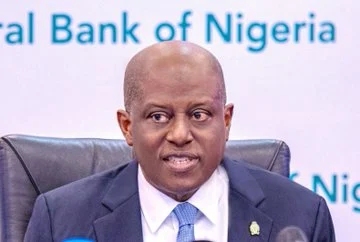
The Central Bank of Nigeria has warned that the nation’s vibrant fintech sector remains excessively dependent on foreign capital, leaving it exposed to global market volatility.
In its 2025 Fintech Policy Insight Report released on Sunday, the apex bank highlighted that while Nigeria remains a leading African hub for financial innovation, this reliance poses a significant risk.
The report noted that startup equity funding in Nigeria fell to $520 million in 2024, down from about $747 million in 2019 a period when the country attracted roughly 37 per cent of all startup investment on the continent.
CBN Governor, Olayemi Cardoso, acknowledged the sector’s resilience amid global economic pressures but stressed the need to develop domestic funding sources. “These dynamics highlight the importance of developing domestic funding avenues, such as leveraging Nigeria’s capital markets, to reduce currency risk and sustain fintech growth,” the report stated.
Cardoso added that Nigeria is undergoing rapid financial evolution, with fintech now driving inclusion at scale amid improved currency and economic stability.
The report also underscored Nigeria’s leadership in digital payments infrastructure, revealing that more than 25 per cent of electronic transactions are processed through real-time channels. In 2024, nearly 11 billion instant payments were processed, up from five billion in 2022.
However, the CBN identified several challenges. According to a stakeholder survey, 87.5 per cent of fintech firms said compliance costs significantly hinder innovation, while delays in regulatory approvals remain a bottleneck.
Looking ahead, 62.5 per cent of fintech companies plan regional expansion, supported by calls for regulatory “passporting” frameworks to ease cross-border operations. The CBN cautioned that such growth requires a stable funding base and coordinated regulation.
The central bank affirmed its commitment to modernising regulations, strengthening consumer protection, and building domestic investment channels to secure the sector’s future and position Nigeria as a global fintech rule-setter.