Environment
Derivation Funds: N-Delta activist urges Tinubu to channel oil revenue into mega projects
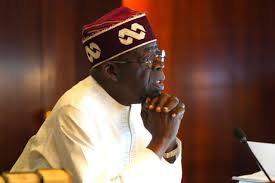
Renowned Niger Delta environmental and human rights activist, Chief Mulade Sheriff, has called for a fundamental overhaul of Nigeria’s oil revenue management framework, urging President Bola Ahmed Tinubu to halt the direct payment of the 13 per cent oil derivation funds to oil-producing state governments and instead deploy the resources into federally coordinated mega development projects across the Niger Delta.
Mulade, the Ibe-Serimoowei of the oil-rich Gbaramtu Kingdom in Delta State, made the call in a statement issued on Wednesday, January 7, 2026, arguing that decades of direct disbursement of derivation funds to state governments have failed to translate into tangible development in oil-bearing communities.
Positioning his argument within the broader national oil and infrastructure debate, the activist said Nigeria’s continued struggle with energy security, crude oil theft, environmental degradation and youth restiveness in the Niger Delta is closely linked to how oil revenues are utilised.
“Despite trillions of naira paid out as 13 per cent derivation over the years, many oil-producing communities still live without good roads, clean water, quality healthcare or functional schools,” Mulade said.
“The derivation fund was designed to bring relief and development to host communities, but that objective has been largely defeated by diversion, mismanagement and outright misappropriation.”
He noted that the persistent lack of visible projects in core oil-producing areas has undermined public confidence in both state governments and federal intervention agencies, while also worsening insecurity around critical oil and gas infrastructure.
According to him, Nigeria cannot sustainably increase crude oil production or protect strategic assets such as pipelines, flow stations and export terminals if host communities remain impoverished and environmentally degraded.
Mulade proposed that the Tinubu administration consider a policy shift that would redirect derivation funds into transparent, independently monitored mega projects with regional impact. He listed priority areas to include coastal and shoreline protection, large-scale environmental remediation, strategic road and bridge networks linking riverine communities, modern healthcare facilities, education infrastructure, and structured youth employment schemes tied to the oil and gas value chain.
“Rather than sharing money that disappears into private pockets, we should invest derivation funds in visible, life-changing projects that will stand the test of time,” he said. “These are projects that can support national oil output by stabilising host communities and protecting vital infrastructure.”
The activist further argued that a centrally coordinated project-based approach would align derivation spending with national development priorities, reduce duplication of projects by states and intervention agencies, and improve accountability.
He suggested that such projects be executed through special-purpose development frameworks with strong community participation, clear performance benchmarks and credible oversight involving civil society, host community representatives and relevant federal institutions.
“This administration has a historic opportunity to correct decades of waste in the Niger Delta,” Mulade added. “If oil revenues are properly invested in infrastructure and human capital, insecurity, oil theft and pipeline vandalism will naturally decline.”
Beyond the executive arm, Mulade called on the National Assembly to support constitutional and policy reforms that would allow for a more effective utilisation of derivation funds strictly for the benefit of oil-bearing communities and the national economy.
He expressed confidence that with political will and transparency, President Tinubu’s administration could redefine Niger Delta development, strengthen Nigeria’s oil sector stability and restore public trust in the management of oil revenues.
The call comes amid renewed national conversations on boosting crude oil production, reforming fiscal federalism and ensuring that oil wealth delivers sustainable development to both host communities and the wider Nigerian economy.