News
Ebola Outbreak in DRC and Uganda Escalates to 894 Cases and 204 Deaths Within First Month
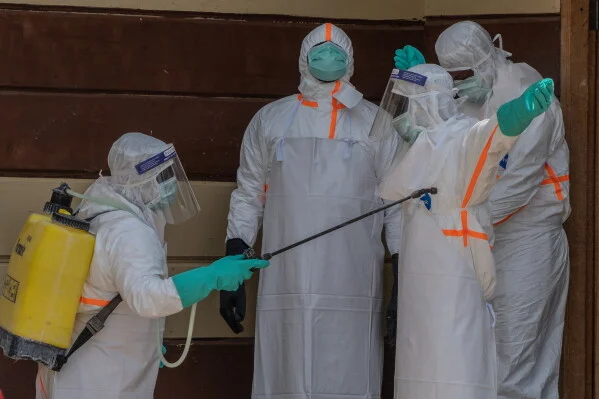
A rapidly expanding Ebola outbreak in the Democratic Republic of the Congo (DRC) and Uganda has claimed 204 lives and infected 894 people within its first four weeks, health officials confirmed on Thursday.
The outbreak, officially declared on May 15, 2026, already ranks as the third-largest Ebola surge in history by total cases and deaths, trailing only the 2014 West African epidemic and the 2018–2019 outbreak in the DRC. While 74 recoveries have been documented, officials warn that cases spiked by 38% over the past week alone as the virus spread across 32 health zones.
The Democratic Republic of the Congo remains the primary driver of the crisis. Ituri Province has emerged as the absolute epicenter, accounting for 78% of all fatalities in the country. Conditions are particularly critical in North Kivu, where ongoing regional insecurity is severely restricting emergency response teams, driving up the case fatality rate, and crippling containment efforts. By contrast, the situation in Uganda remains relatively contained.
All 19 confirmed cases and two deaths are restricted to a single health zone in Kampala, where health workers have successfully achieved a 100% contact listing rate.
Public health agencies warn that the outbreak involves the Sudan strain of the Ebola virus, for which there are currently no licensed vaccines or specialized therapeutic treatments. Consequently, containment relies entirely on early isolation, contact tracing, and daily monitoring.
Emergency responders are currently facing severe operational bottlenecks. Out of an estimated 17,000 to 35,000 contacts that require daily monitoring, only about 6,000 have been listed. Of those, fewer than 4,000 are being actively followed, meaning less than 15% of necessary contacts are being monitored compared to the 95% target required to control the virus. Furthermore, there is a catastrophic deficit in safe burial capacities, with only seven of the 49 required teams currently deployed.
In response to the declaration of a continental public health emergency, regional health ministers have established a unified six-month response plan alongside the World Health Organization (WHO), carrying a $517 million budget.
There has been significant logistical progress in several pillars, including eliminating initial testing backlogs to achieve a 24-hour turnaround time. Over 60 metric tonnes of medical supplies have been deployed, and 90% of travelers exiting the DRC are now being screened to prevent international transmission without resorting to broad border closures.
However, treatment facilities are nearing their limits, with nine active centers in the DRC at 86% bed occupancy, prompting the urgent construction of nine additional centers. Despite these field advancements, severe financial delays threaten the intervention; while international summits mobilized $910 million in pledges, less than $90 million has actually been released to frontline healthcare providers.