News
Ekiti Governorship Poll: Stakeholders Push for Stiffer Measures Against Vote Buying, Violence
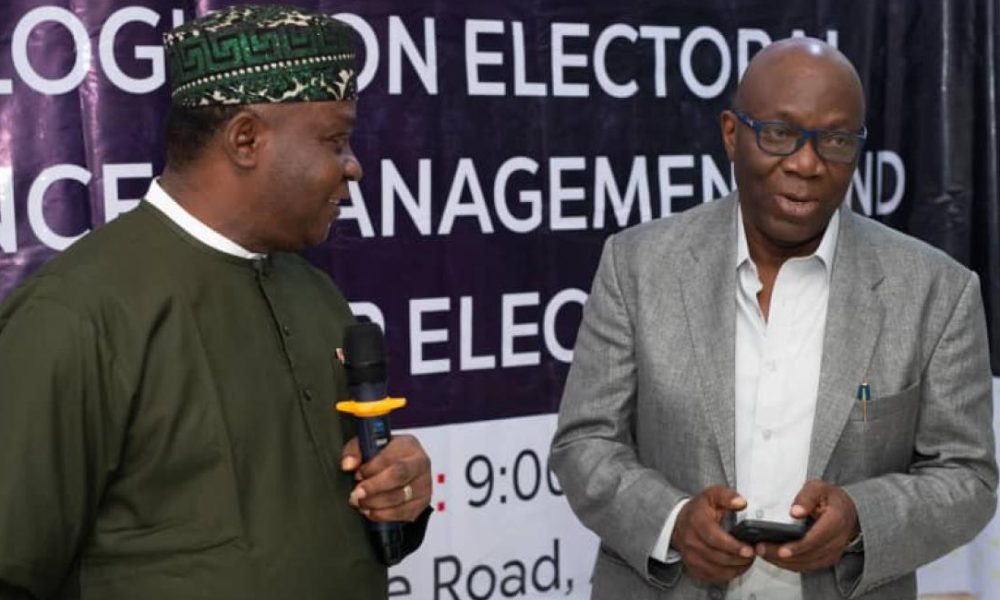
Ahead of the June 20 governorship election in Ekiti State, stakeholders in Nigeria’s electoral process have called for stringent measures to combat vote buying and electoral violence, warning that such malpractices could severely damage the credibility of the poll.
The demand was made on Monday during a policy dialogue organised by the Peering Advocacy and Advancement Centre in Africa (PAACA) and interpreteAfrica in Ado Ekiti. Participants included officials from the Independent National Electoral Commission, the National Orientation Agency, the Inter-Party Advisory Council, security agencies, civil society groups, the media, as well as traditional and religious leaders.
Stakeholders emphasised that the integrity of the election would depend largely on the ability of institutions to deter voter inducement and ensure a violence-free environment before, during, and after the poll.
PAACA Executive Director, Ezenwa Nwagwu, noted that a recent public opinion survey revealed that security is the most pressing issue for Ekiti citizens, with about 70 percent of respondents identifying it as a top priority. While a majority indicated willingness to vote, 57 percent expressed fear of election-related violence, a concern that could suppress turnout if not addressed.
Nwagwu also highlighted a generational gap in voter participation, with older citizens showing stronger turnout tendencies while many young people remain less engaged despite their active online presence. He called for sustained voter education and issue-based campaigns focused on security, jobs, and infrastructure.
The Resident Electoral Commissioner in Ekiti, Dr. Bunmi Omoseyindemi, said INEC is scaling up efforts to address electoral offences, including vote buying, multiple voting, political violence, misinformation, and destruction of electoral materials.
Keynote speaker, Professor Shola J. Omotola of Federal University, Oye Ekiti, warned that electoral offences remain a longstanding challenge with no solution in sight, noting that many violations identified as far back as 1983 are still relevant today. He stressed that such offences undermine electoral integrity, compromise security, and weaken public trust in democratic institutions.
Professor Ibiyinka Ogunlade, a former Deputy Vice Chancellor of Ekiti State University, emphasised that tackling electoral malpractice requires collective responsibility and sustained civic engagement
The Ekiti NOA Coordinator, Akomolede Fumilayo Oluwakemi, said the agency has intensified public sensitisation across the state, reminding residents that they are critical stakeholders in the electoral process.
The Chairman of the Council of Traditional Rulers, Oba Adejimi Adu Alagbado, the Ogoga of Ikere Ekiti, assured that traditional leaders would continue to sensitise rural communities to shun violence and participate in the election.