News
Federal Government Vows to End State Interference in Local Government Funds
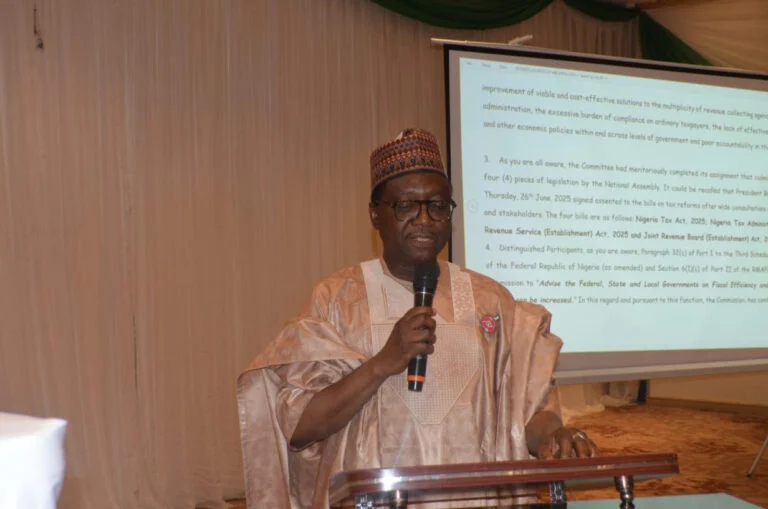
The Federal Government has reaffirmed its commitment to stopping the longstanding practice of state governments interfering with funds allocated to local governments from the Federation Account.
The Chairman of the Revenue Mobilisation Allocation and Fiscal Commission, Mohammed Shehu, made the declaration on Thursday in Abuja during the commission’s 2026 budget defence before the House of Representatives Committee on Finance.
Shehu expressed concern over persistent state encroachment on local government finances and stated that the commission is ready to take concrete steps to enforce financial autonomy at the grassroots level.
“The Commission would like to establish a Local Government Committee now… to monitor every single Local Government in Nigeria,” Shehu said. He added that President Bola Tinubu had personally warned governors to allow local government autonomy or face an executive order, a move the RMAFC fully supports.
The chairman linked Nigeria’s current challenges to dysfunctional local governments, noting they performed better even during military rule.
Shehu also commended the House Committee on Finance for enhancing the RMAFC’s credibility, noting that revenue-generating agencies now engage proactively with the commission.
He reported that the RMAFC had completed an audit of Niger Delta oil assets and is finalizing a new revenue allocation formula for all tiers of government and political office holders. The revised remuneration package for political office holders has been submitted to the President for onward transmission to the National Assembly.
Committee Chairman Abiodun Faleke praised the RMAFC for its role in boosting national revenue.
The issue of state interference in local government funds has been a chronic problem in Nigeria’s federal system. Despite constitutional recognition, allocations are often controlled by governors through State-Local Government Joint Accounts, leading to withheld or diverted funds.
This practice has widely been blamed for weak service delivery, poor infrastructure, and the collapse of local governance. Recent Supreme Court rulings and renewed federal pressure have brought the issue back into focus, with the government signaling a stronger stance to ensure councils’ financial independence.