News
FG: No Evidence Of Community Transmission As Ebola Patient Recovers
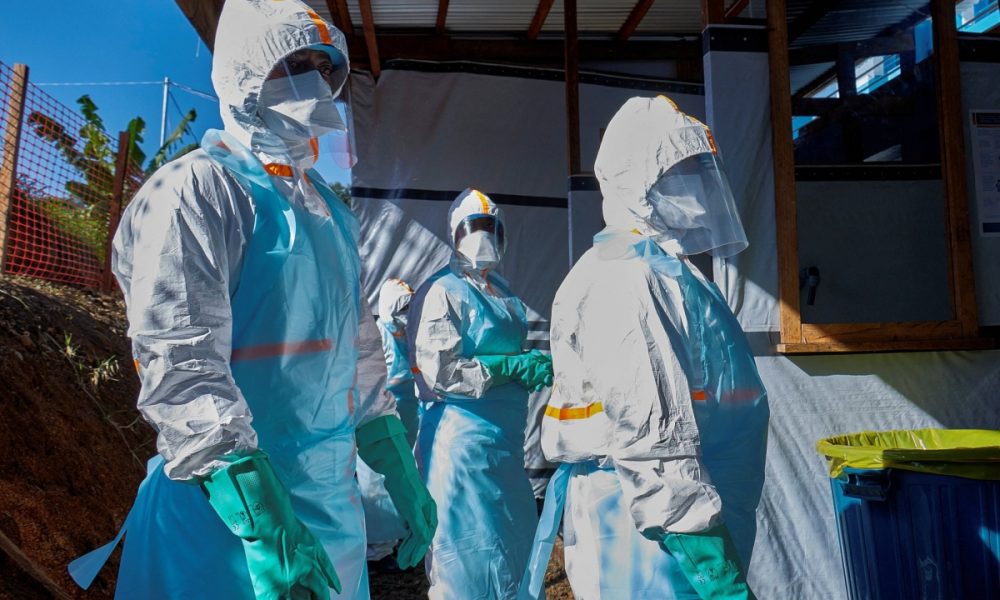
The Federal Government has reported signs of recovery in Nigeria’s confirmed Ebola patient, while assuring the public that there is currently no evidence of community transmission of the virus.
The Federal Ministry of Health and Social Welfare disclosed this in an update issued on Friday, as health authorities continued contact tracing, quarantine and monitoring to contain the infection.
The ministry said national coordination, preparedness in health facilities and other public health measures had been strengthened as part of efforts to prevent further transmission.
Nigeria confirmed the Ebola case on October 20 following laboratory tests on a woman who had recently travelled from Uganda and received treatment at a private hospital in Abuja.
According to the World Health Organisation (WHO), the patient’s infection was identified as Ebola Bundibugyo virus disease. Her symptoms began on October 7, four days after her arrival in Nigeria, and she sought medical attention at a private health facility on October 11.
The confirmation prompted the activation of emergency public health measures, including the identification and monitoring of people who might have been exposed to the patient.
The Federal Ministry of Health previously reported that 44 close contacts had been identified following confirmation of the infection.
The contacts include people who may have encountered the patient or been exposed during her treatment. Health officials are monitoring those identified as part of efforts to detect possible secondary infections and limit further transmission.
The Nigeria Centre for Disease Control and Prevention (NCDC) has activated its incident management system to coordinate the response, while the WHO is supporting Nigerian authorities with case investigation, contact tracing and infection prevention measures.
Health facilities have also been urged to strengthen infection prevention and control, promptly identify and isolate suspected cases, and report them to public health authorities.
The latest update did not provide a revised number of contacts or disclose whether any additional infections had been confirmed.
The circumstances surrounding the patient’s infection remain under investigation, including her travel history and possible exposure before she became ill.
Reports by international and Nigerian media have identified the patient as a Ugandan-born woman married to a Swiss diplomat based in Abuja.
Switzerland’s Federal Department of Foreign Affairs said she was believed to have contracted the virus during a visit to Uganda.
However, accounts of her movements before arriving in Nigeria have differed. Ugandan authorities suggested she had travelled to the Democratic Republic of the Congo (DRC), where the current outbreak began, but the WHO and the Africa Centres for Disease Control and Prevention said they had not received verified information confirming that journey.
Health authorities are working to reconstruct her movements and establish the likely source of infection.
The patient’s husband, who reportedly travelled with her, was placed in isolation, according to reports citing Swiss authorities. He had not developed symptoms at the time of those reports.
Nigeria’s case comes amid a wider outbreak of Bundibugyo virus disease, which was declared in the DRC in May 2026. The outbreak has also affected other African countries, including Kenya.
The European Centre for Disease Prevention and Control reported on October 22 that Kenya had recorded nine cases, including one death, as authorities continued investigating transmission and monitoring contacts.
The Bundibugyo virus belongs to the group of viruses that cause Ebola disease. According to public health authorities, the infection can spread through direct contact with the blood or other bodily fluids of an infected person, or through contaminated materials.
There is currently no licensed vaccine specifically approved for the Bundibugyo strain, making early detection, isolation, contact tracing and infection prevention central to controlling its spread.
The Federal Ministry of Health has urged Nigerians to follow recommended precautions, obtain information from recognised health authorities and avoid circulating unverified reports about the case.