News
IGP, Stakeholders Seek Removal Of Police From Contributory Pension
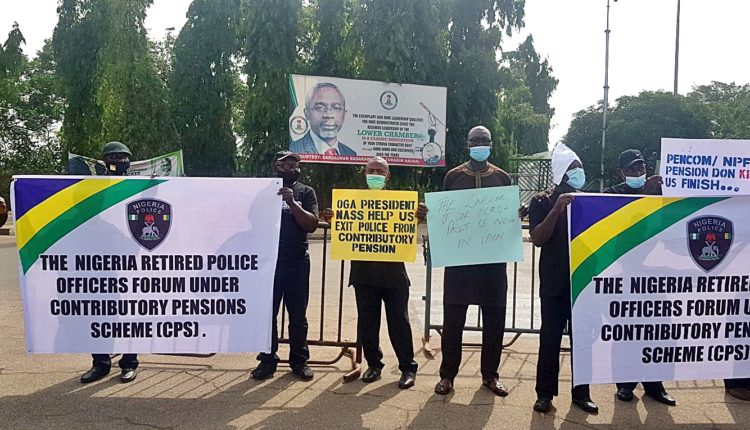
Stakeholders at a public hearing organised by the House of Representatives, have called for the exemption of the Nigeria Police Force (NPF) from the Contributory Pension Scheme (CPS).
The House on Tuesday held a public hearing on two pension Bills namely ‘The Bill For An Act To Amend The Pension Reform Act, 2014 To Provide For The Exemption Of The Nigeria Police Force From The Contributory Pension Scheme And For Related Matters’, and ‘A Bill For An Act To Amend Sections 1(C), 7(2), 8(1), 18, 24 And 99 Of The Pension Reform Act, Cap P50 LFN 2014 By Providing That A Pensioner Shall Receive At Least 75% Of His Retirement Benefits Immediately Upon Retirement And Criminalise The Undue Delay In The Payment Of Pensions And For Related Matters.’
Sponsor of the Bill to exempt the police from the CPS, Hon. Francis Ejiroghene Waive, said operating under the current pension scheme has been both unpalatable and regrettable for the retirees of the Nigerian Police Force.
He argued that the police be exempted from the scheme just like the Armed Forces and the Department of State Services (DSS).
“For example, the highest retirement benefit of a Deputy Superintendent of Police under this obnoxious pension scheme is N2.5m and that of Assistant Superintendent of Police is N1.5m while their equivalent in Army (Captain) and DSS are paid N12.8m and N10.3m respectively. Upon retirement, the monthly take-home of a retired Police DSP is just N31,600 while that of a Captain, an equivalent in the Army is N180,000. While for the Police Inspector is N15,000, a warrant officer, the Army equivalent to a Police Inspector takes home N120,000. Ladies and gentlemen, what is good for the goose are good for the gander,” he said.
He said in these days of insecurity across the nation, exempting the police from the Contributory Pension Scheme could just be the magic to motivate officers and men of the Force to go the extra mile and save the country.
For his part, the Inspector-General of Police, Usman Alkali Baba, said the Police should get equal treatment with services of the Armed Forces and other intelligence services, especially as the lead agency, saddled with the responsibility of maintaining the internal security, law and order in the country, with attendant risk and sacrifices, including the supreme price.
The IGP, who was represented by a Deputy Inspector General of Police, DIG Sanusi Lemu, said the unpleasant experiences of retired police officers under the present pension scheme tends to demotivate officers and men and also serve as an incentive for corrupt practices in a bid to avoid bad fate upon eventual retirement.
He added that the leadership of the Nigeria Police Force was convinced that the amendment being proposed would not only significantly address the age-long challenges associated with the pension administration in the Force, but it would also be in the overall best interest of the entire members of the Police Force, both retired and serving officers.
Majority of stakeholders at the public hearing advocated the exemption of the police from the current pension scheme.
But the Nigeria Labour Congress (NLC) opposed the move, saying this would imply additional financial burden on the Federal Government by way of unsustainable pension obligations.
This was as the Director-General of the Nigeria Pension Commission (PenCom), Hajiya Aisha Dahir-Umar, also opposed the exemption of the Police from the scheme, saying all their issues can be resolved within the CPS.
While presenting the position of the NLC at the hearing, Hon. Uche Ekwe, said if the agencies of government are being exempted from the CPS, then it should not be forced on others.
“Where will the money to fund the Defined Benefits Scheme for the exempted officers come from? Will it still be funded from the national budget that is currently hardly sufficient to fund other commitments of Government, including healthcare and social security?
“What has changed in the management of Defined Benefits Scheme especially in the light of news of arrests and convictions of individuals involved in the mismanagement of pensions?” he queried.
The NLC added that government would be unable to sustain pension payment under the Defined Benefits Scheme.
Ekwe said, “This is because exemption of the personnel of the NPF would imply additional financial burden on the Federal Government by way of unsustainable pension obligations. Statistics from the pension industry indicates that the Federal Government would need over N1 trillion to finance the exemption of the police personnel from the CPS. This liability is expected to significantly increase with the proposed yearly recruitment of 10,000 personnel into the police force as announced by the Federal Government. The Federal Government is already overburdened with the payment of pensions under the Defined Benefits Scheme as illustrated by the 2022 Appropriation Act, which made a provision under the Service Wide Vote for the sum of N577.3billion as total allocation for Pension and Gratuities.
“The NLC, therefore, recommends without trepidation, that the issues of inadequacy of retirement benefits in the Retirement Savings Account (RSA), which is always posited by the proponents of the exemption of the Nigeria Police, could be sufficiently addressed within the framework of the CPS. The NLC accordingly calls on the Government to enhance the salary of the Nigeria Police personnel and restore the payment of gratuity to workers upon their retirement. Incidentally, gratuity has not been abolished by the PRA 2014,” he said.
The NLC also opposed the amendment of the Pension Act to enable pensioners collect 75 per cent of their pension upon retirement.