Business
IMF Urges Nigeria To Formulate Clear Policies To Stem Inflation
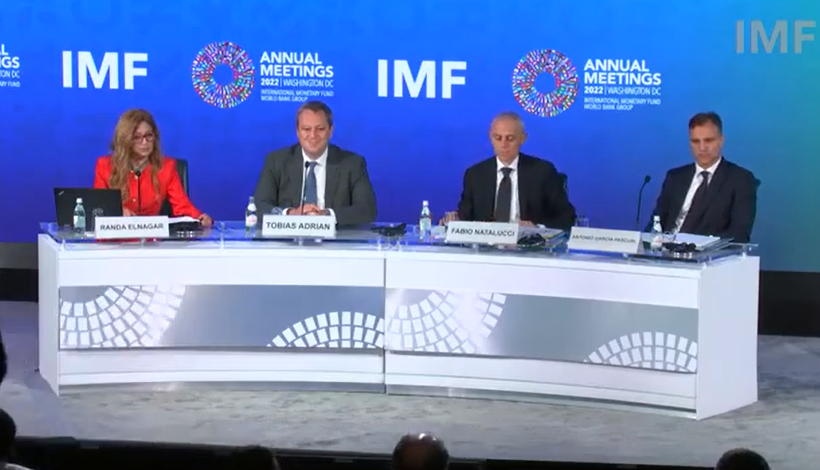
The International Monetary Fund (IMF) has urged Nigeria and other countries to make clear policy decisions for price stability amid rising inflationary pressures.
The Bretton Wood institution said Nigeria’s inflation rate would moderate to 19 percent this year and drop to 17 percent in 2023, reflecting on the monetary policy actions of the Central Bank of Nigeria (CBN).
The institution disclosed this on Tuesday at its headquarters in Washington while unveiling the October 2022 Global Financial Stability report, “Financial Stability in the New High-Inflation Environment”
The IMF said central banks need to act resolutely to bring inflation back to target and avoid a de-anchoring of inflation expectations, which would damage their credibility.
It added that the global economic outlook had deteriorated materially since the April 2022 Global Financial Stability Report (GFSR).
“A number of downside risks have crystallised, including higher-than-anticipated inflationary pressures, a worse-than-expected slowdown in China on the back of COVID-19 outbreaks and lockdowns, and additional spillovers from Russia’s invasion of Ukraine. As a result, the slowdown of the global economy has intensified,” the report said
“Clear communication about policy decisions, commitment to price stability, and the need for further tightening will be crucial to preserve credibility and avoid market volatility,” IMF added.
“Exchange rate flexibility helps countries adjust to the differential pace of monetary policy tightening across countries. In cases where exchange rate movements impede the central bank’s monetary transmission mechanism and/or generate broader financial stability risks, foreign exchange intervention can be deployed. Such interventions should be part of an integrated approach to addressing vulnerabilities as laid out in the IMF’s Integrated Policy Framework.
“Emerging and frontier markets should reduce debt risk through early engagement with creditors, multilateral cooperation, and international support. For those in distress, bilateral and private sector creditors should coordinate on preemptive restructuring to avoid costly defaults and prolonged loss of market access. Where applicable, the group of Twenty Common Framework should be used”, it added.