News
Natural Causes, Not Poison, Killed MKO Abiola — Abdulsalami Abubakar
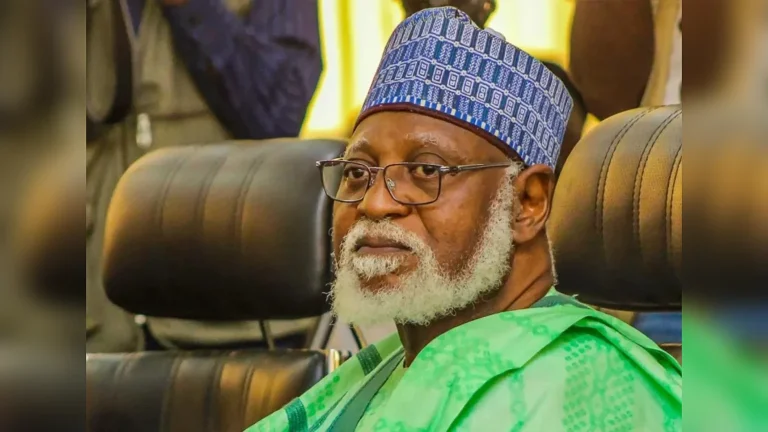
Former Head of State, retired General Abdulsalami Abubakar, has dismissed long-standing claims that Chief MKO Abiola was poisoned, asserting that an international autopsy confirmed the political icon died of natural causes.
The disclosure is detailed in Chapter 21 of Abubakar’s newly released 264-page autobiography, *Call of Duty*. The 27-chapter book was publicly presented on Saturday at the Aso Rock Villa in Abuja to mark the former leader’s 84th birthday. President Bola Tinubu was represented at the event by Vice President Kashim Shettima.
Reflecting on the events of July 7, 1998, Abubakar stated that Abiola collapsed during an official meeting with a visiting United States delegation. The delegation included Tom Pickering, then U.S. Undersecretary of State for Political Affairs, and Susan Rice, who was serving as the Assistant Secretary of State for African Affairs.
“I do not believe Abiola was poisoned,” Abubakar noted in the book. He explained that following requests from the Abiola family, a joint team of pathologists from the United States, the United Kingdom, Canada, and Nigeria was assembled to conduct an autopsy, which ultimately attributed the death to natural causes.
According to the autobiography, Abiola had been managing severe pre-existing medical conditions, including hypertension and a heart ailment, since his initial detention in 1994 under the General Sani Abacha administration.
Abubakar referenced a September 1994 radiological report from the Nigerian Army Defence Hospital in Sokoto, which noted that Abiola suffered from an enlarged heart consistent with hypertensive cardiac disease.
The book recounts the moments leading up to the fatal collapse, quoting Susan Rice’s 2019 memoir, *Tough Love*. Rice noted in her account that Abiola began coughing severely and persistently about five minutes into their conversation.
According to further testimonies cited from Tom Pickering, Abiola complained of feeling hot, became visibly distressed, and experienced severe breathing difficulties.
A doctor arrived within 10 minutes, diagnosed a heart attack, and ordered an immediate hospital transfer. Due to the unavailability of an ambulance, Abiola was rushed to the presidential clinic in a standard vehicle, where medical personnel were ultimately unable to revive him.
Abubakar recalled receiving the news in a state of shock from his Chief Security Officer, Abdulrasheed Aliyu, before personally breaking the news to the Abiola family. The former Head of State observed that hosting the American delegation was critical in ensuring transparency, noting that if Abiola had passed away without external witnesses, it would have fueled heavier suspicions of a cover-up.
Additionally, Abubakar used the book to deny historical allegations that he received $500 million in cash following the death of General Abacha, labeling the rumor as “pure fantasy.”
Chief MKO Abiola, the presumed winner of the annulled June 12, 1993 presidential election, died in custody after four years of detention, just one month after the sudden demise of military dictator Sani Abacha. Abubakar subsequently assumed power and led Nigeria’s transition back to democratic governance, handing over to civilian President Olusegun Obasanjo on May 29, 1999.