Health
Over 3m People Die From Medication Errors Annually- WHO
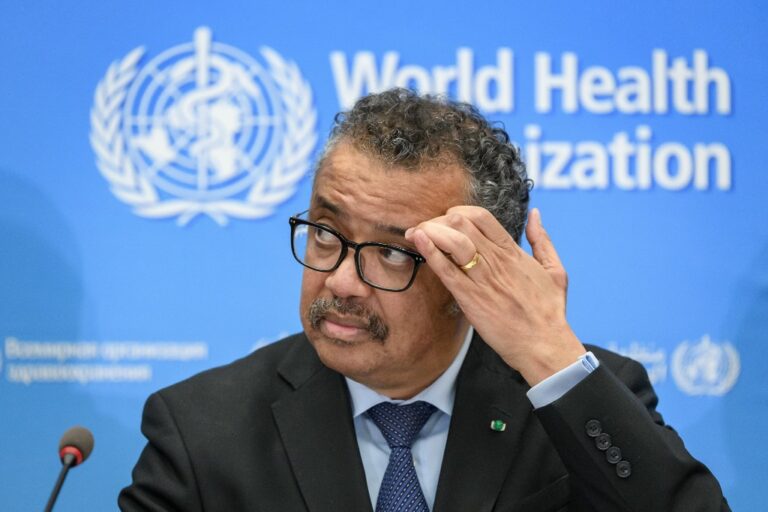
Globally, the World Health Organization says that medication errors contribute to more than three million deaths globally every year.
This disclosure was made by Its Regional Director for Africa, Dr Matshidiso Moeti in her message to mark the 2022 World Patient Safety Day.
Moeti said the Days aims at raising awareness of the importance of people-centred care and preventing harm to patients.
She noted that medication errors were exacerbated by overwhelmed health systems during the COVID-19 pandemic.
According to her, about one in every four cases of preventable medication harm is clinically severe, or life-threatening.
“While there is limited data for the African continent, it is generally acknowledged that there is a high magnitude of unsafe medication practices,’’ she noted.
Moeti said that the Day was specifically designed to draw attention to the need to improve systems to support safe medication and address unsafe practices.
According to her, it focuses on three primary areas – high-risk situations, transitions of care and “polypharmacy’’, which is the use of multiple medicines at once.
“Poly pharmacies are particularly common amongst older people with chronic health diseases.
“Medication errors occur because of weaknesses in medication systems and are aggravated by shortages of well-trained health staff and poor working and environmental conditions for delivery of quality healthcare.
“Among low and medium-income countries, the African region has the highest prevalence of substandard and counterfeit medicines of about 18.7 per cent,’’ she said.
She decried the administration of surplus medication at home; the purchase of medication from pharmacies on the advice of friends and relatives rather than on prescription by trained professionals.
Moeti stressed that the use of old prescriptions to buy medication to treat current ailment is a common practice that should be stopped.
“One study done in 2021 showed that as many as one in every three respondents admitted to self-medication to prevent COVID-19.
“This is unacceptably high because such unguided practices lead to dangerous consequences as a result of drug interactions.
“It also leads to incorrect administration, dosage or choice of treatment. Consequences include delays in treating diseases, dependence and abuse, disability, and even death,’’ she lamented.
Moeti noted that medication systems and human factors were major contributory factors to unsafe practices.