News
Paying salaries, building roads not achievements – Gov Sule
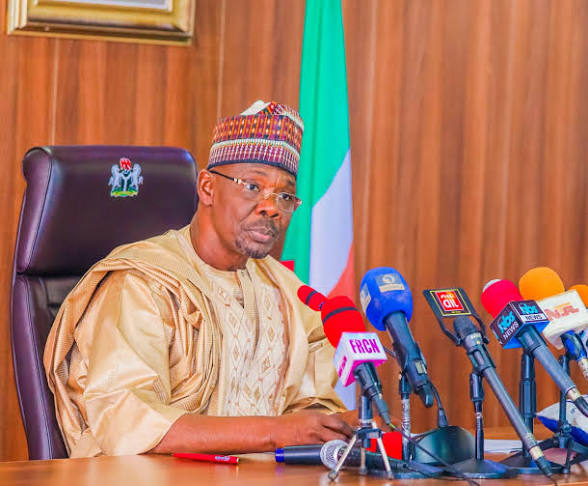
Nasarawa State Governor, Abdullahi Sule, has criticised political office holders who present routine responsibilities such as salary payments and road construction as major achievements, arguing that leadership should instead be measured by impactful and innovative solutions.
Speaking on Wednesday at the 59th inaugural lecture of Nasarawa State University, Keffi, Governor Sule said that simply performing the basic duties for which elected officials were voted into office does not constitute meaningful progress.
“A rendered project that has no direct impact on the people you are leading is no service,” he said. “Any time you see a governor saying that one of my achievements is that I pay salaries or provide water, power, building roads, even if they are flyovers, that governor doesn’t know the hell he is talking about.”
He explained that thinking outside the box to address unexpected challenges is what true service requires. As an example, he cited his administration’s decision to rebuild a modern market for traders whose shops were repeatedly destroyed by fire, rather than continuing the previous practice of offering cash compensation.
According to the governor, the government had initially provided financial support ranging from N2 million to N10 million after each fire incident, only for the market to burn down again months later. Since the modern market was constructed, he said, no further fire outbreaks have been reported.
He also highlighted efforts to control flooding in the Auta area near Keffi, noting that improved internally generated revenue had enabled the construction of a bridge, which has since curtailed seasonal flooding.
In his remarks, the President of the Nigerian Institute of Public Relations, Dr Ike Neliaku, commended Governor Sule’s development efforts, particularly ongoing infrastructure projects across the state.
The NIPR Vice President, Prof Emmanuel Dandaura, warned during his lecture that a disconnect between communication and performance could erode public trust in institutions. He called for greater accountability and responsiveness, stressing that institutions must prioritise listening to stakeholders to maintain credibility.