News
Presidential Aide Defends First Lady’s Stance on Micro-Enterprise
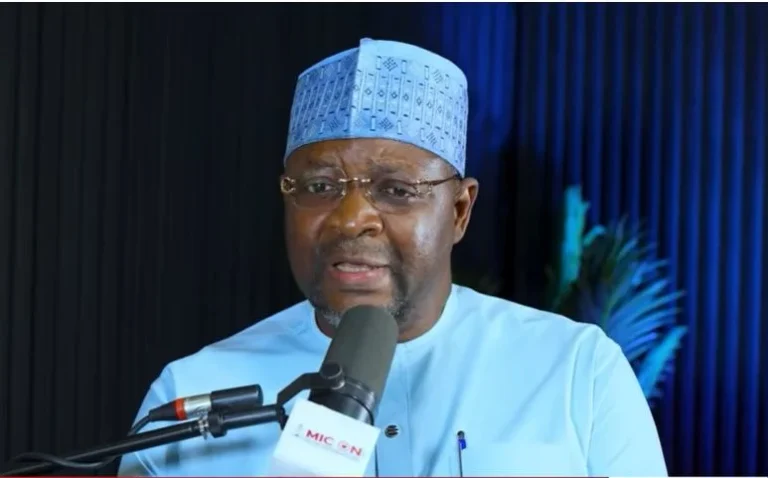
Sunday Dare, the Special Adviser to the President on Media and Public Communication, has come to the defense of First Lady Senator Oluremi Tinubu following public criticism of her recent suggestions that Nigerians should consider starting small-scale businesses.
The First Lady’s comments, made during a meeting of the Renewed Hope Initiative in Abuja, suggested that venturing into micro-enterprises like selling roasted corn or making snacks like *akara* and *kuli-kuli* were viable options due to their low startup costs. The remarks sparked significant backlash from some Nigerians, many of whom argued the advice was disconnected from the realities of the country’s high inflation and economic hardship.
During an interview on the Mic On Podcast on Saturday, Dare pushed back against the criticism, arguing that the message was intended to promote self-reliance and the dignity of labor rather than to belittle the struggles of the youth.
Drawing from his own upbringing, Dare shared a personal account of his childhood to illustrate the potential of the informal economy. “Look at me. Wherever I am today, my mother sold *akara*,” he revealed. “Wherever I am today, my mother sold bananas. I carried bananas in a tray on my head to markets in Jos, Plateau State. My mother sold oranges, and through that, they were able to train me.”
He questioned why modern critics would dismiss an economic survival model that has historically supported Nigerian families for generations. Dare noted that while these businesses may seem small, they form the backbone of the country’s informal sector and offer a pathway to financial engagement.
The presidential aide clarified that the First Lady’s intention was not to suggest that Nigerians should remain in petty trading indefinitely, but rather to encourage an entrepreneurial mindset. “The point she is making is, whatever it is, be engaged in some kind of enterprise,” he concluded, stressing that starting small is a foundational step in building sustainable livelihoods.