News
Putin Congratulates Iran’s New Supreme Leader, Vows Continued Partnership
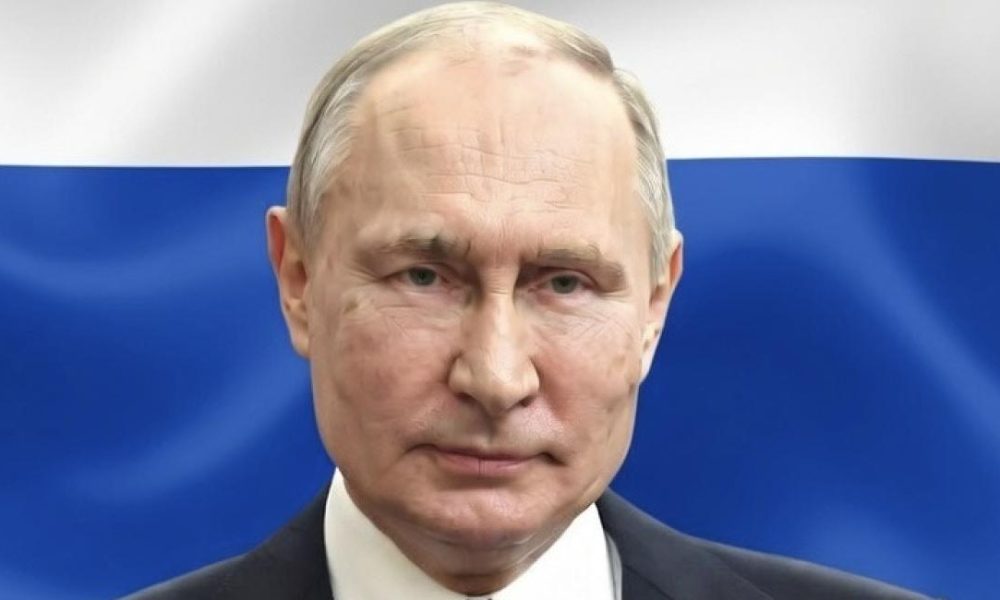
Russian President Vladimir Putin has officially congratulated Mojtaba Khamenei on his appointment as Iran’s new supreme leader, reaffirming Moscow’s commitment to strengthening ties with Tehran amid escalating regional tensions.
In a statement released by the Kremlin on Monday and cited by Al Jazeera, Putin welcomed the new Iranian leader to his post and expressed confidence in his ability to navigate the country through a period of significant challenge. The Russian president commended what he described as Khamenei’s leadership qualities and acknowledged the legacy of his predecessor, expressing hope that the new leader would uphold the nation’s established path.
“He believed the new leader would continue the path already laid out for the country,” the Kremlin stated, adding that Putin was confident Khamenei would carry on his father’s work “with honour” and unite the Iranian people “in the face of severe trials.”
The message also served to reinforce Moscow’s strategic partnership with Tehran, a relationship that has expanded in recent years across political, military, and economic domains. Putin used the occasion to pledge Russia’s unwavering support, stating his desire to “confirm unwavering support for Tehran and solidarity with our Iranian friends.”
The diplomatic outreach comes at a time of heightened conflict between Iran and a U.S.-Israeli alliance, following recent strikes. Both nations currently face increased friction with Western powers over geopolitical disputes, sanctions, and their respective roles in regional affairs.
Mojtaba Khamenei was appointed supreme leader by Iran’s Assembly of Experts on Sunday, following the death of his father, Ayatollah Ali Khamenei. According to reports from Iranian state media and confirmation from U.S. officials, the late leader was killed on February 28 in a joint U.S. and Israeli strike on Tehran. The attack, which also targeted Iranian military infrastructure, has plunged the Middle East into deeper conflict, prompting a 40-day national mourning period in Iran.
The new supreme leader, a mid-ranking cleric with close ties to the powerful Islamic Revolutionary Guard Corps (IRGC), had long been viewed by some factions within the establishment as a potential successor. Although the Islamic Republic’s ideology traditionally discourages hereditary succession, his support within the IRGC and the enduring influence of his father’s office were key factors in his rise.
Ayatollah Ali Khamenei had ruled Iran since 1989 and was a central figure in the “Axis of Resistance,” a network of allied groups across Lebanon, Iraq, Syria, Yemen, and Palestine.
Putin’s endorsement signals Moscow’s intent to maintain its alignment with Tehran under its new leadership, continuing a partnership that has seen the two nations coordinate closely on key international issues.