News
Sokoto to Fully Digitise Basic Education by 2027
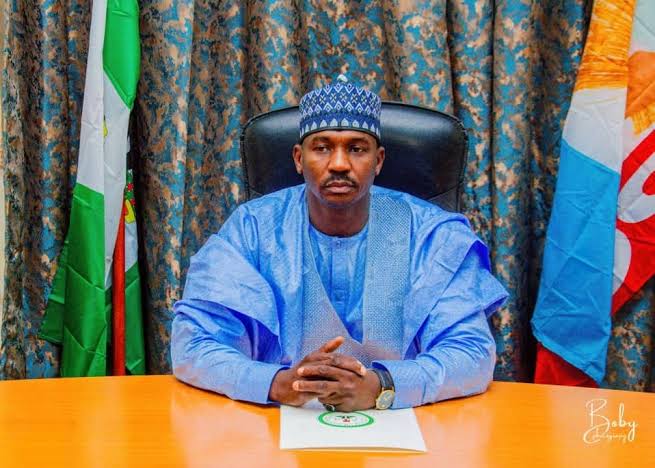
The Sokoto State Government has announced plans to fully digitise its basic and secondary education system within two years, aiming to boost teaching quality, enhance performance tracking, and streamline education governance.
This was disclosed by the Commissioner for Basic and Secondary Education, Prof. Ahmed Ala, in an interview with the News Agency of Nigeria (NAN) on Monday in Abuja.
“We want to fully digitise the information system in basic and secondary education in Sokoto State,” Ala stated.
“This will help assess performance on key indicators, including teacher presence, teaching quality, and administrative duties.”
At the core of the reform is the Education Management Information System (EMIS), which the commissioner said has already started producing measurable results.
The system allows the government to rank schools based on performance, with those scoring 14 points and above rated as “very good” and those six points or below deemed “poor.”
The digitisation also facilitates real-time access to infrastructure data, ICT readiness, library capacity, and other key metrics.
Ala added that development partners can now better identify strengths and weaknesses, allowing for more targeted interventions.
Complementing EMIS is the Teachers Management Information System (TMIS), which enables digital supervision and evaluation of academic staff.
Prof. Ala noted that teacher quality remains a major challenge in the state:
“So many teachers do not yet have the required skills, knowledge, or competence to teach in our schools. We are vigorously addressing this through training.”
So far, the government has conducted two training batches, reaching 2,500 teachers.
Additional rounds are planned as part of a comprehensive upskilling initiative to prepare educators for a more data-driven and digital teaching environment.
The Commissioner affirmed that these efforts are aligned with Sokoto State’s vision of achieving a truly literate and modern society:
“Digitising education is not just a technological upgrade; it’s a governance and accountability tool. It improves transparency, performance, and planning.”
With the digital overhaul expected to be completed by 2027, Sokoto joins the growing list of Nigerian states leaning into technology-led reforms to modernise public service delivery—especially in education.