News
Southern, Middle Belt Leaders Reject Ranching Plan, Demand Transparency on Land Use
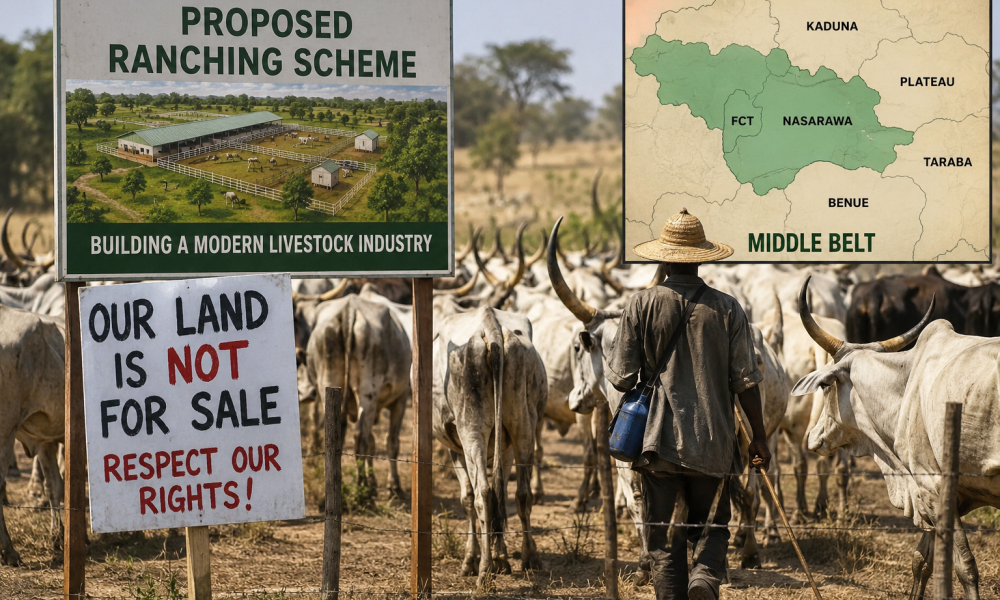
The Southern and Middle Belt Leaders Forum has opposed the Federal Government’s proposed ranching programme in parts of the Middle Belt, warning that the initiative could trigger fresh disputes over land ownership and community rights if not properly handled.
The group expressed concern over plans to establish pilot ranches in several states and territories across the region, arguing that local communities have not been adequately consulted on a policy that could significantly affect their lands and livelihoods.
According to the forum, ranching remains a legitimate and modern approach to livestock production, but its implementation must be transparent, voluntary and in line with the interests of host communities. The leaders stressed that livestock development should not come at the expense of indigenous populations or their ancestral lands.
They questioned the rationale behind concentrating the pilot programme in parts of the Middle Belt, insisting that any national livestock policy should be pursued fairly and without creating the impression that specific regions are being targeted for land acquisition.
The forum also called for full disclosure of the locations earmarked for the project, the legal basis for acquiring the land, the beneficiaries of the scheme and the measures in place to protect the rights of affected communities.
Raising concerns about the history of conflicts linked to land use and grazing activities, the leaders warned that policies lacking broad stakeholder engagement could heighten tensions in already sensitive areas.
They maintained that meaningful consultation with communities, traditional institutions and state governments is necessary before any implementation begins, adding that transparency and public trust are critical to the success of any livestock reform programme.
While supporting efforts to modernise Nigeria’s livestock sector and reduce recurring clashes between farmers and herders, the forum insisted that development initiatives must respect community ownership rights and promote peaceful coexistence.
The leaders urged the government to adopt an inclusive approach that prioritises dialogue, accountability and the protection of local interests, warning that any policy perceived as imposing land-use decisions on communities could face resistance.