News
Tinubu Said Nigeria Is Not Bleeding, Economy Is Doing Fine Despite Nigerians’ Suffering’ — Cardinal Onaiyekan
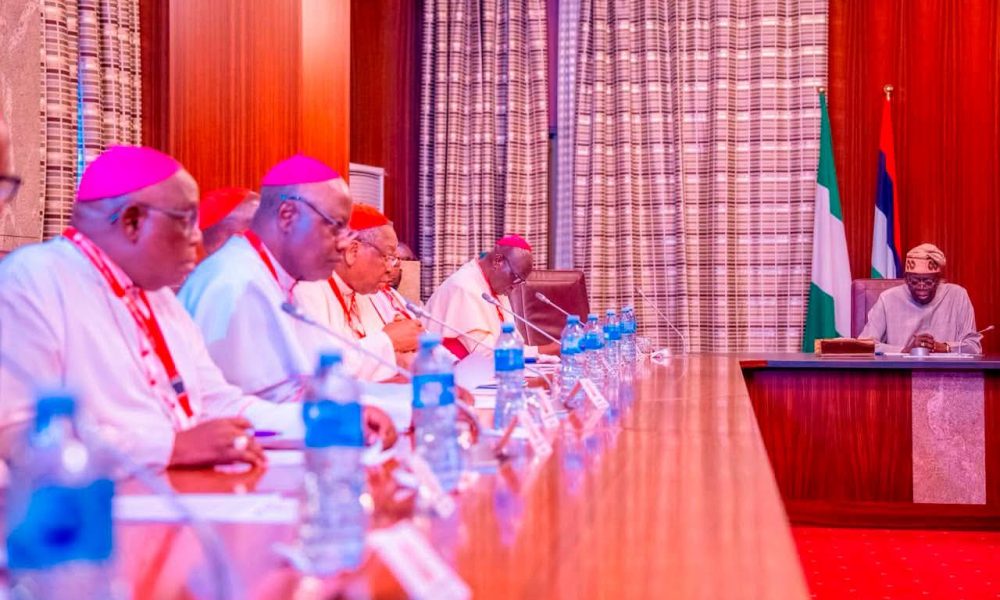
Archbishop Emeritus of the Catholic Archdiocese of Abuja, John Cardinal Onaiyekan, has revealed that President Bola Ahmed Tinubu dismissed concerns raised by members of the Catholic Bishops’ Conference of Nigeria (CBCN) over the worsening hardship and economic suffering across the country, insisting that Nigeria was “not bleeding” and that the economy was performing well despite the realities confronting millions of citizens.
The senior Catholic cleric made the disclosure during an interview on ARISE Television’s Prime Time programme on Friday, offering a rare glimpse into the closed-door meeting between President Tinubu and members of the Catholic Bishops’ Conference of Nigeria.
According to Cardinal Onaiyekan, the meeting was frank, tense and marked by honest exchanges rather than the diplomatic courtesies that often characterise engagements between political leaders and religious authorities.
The Archbishop Emeritus explained that the bishops deliberately chose to present the harsh realities facing ordinary Nigerians instead of telling the President what he described as a “rosy picture” of the country’s situation.
Reflecting on President Tinubu’s reaction after listening to the bishops’ presentation, Cardinal Onaiyekan said it was evident that the President and members of his entourage were unhappy with the message they received.
“You asked me, how did I see the face of the President in reaction? I was not surprised that he was not looking very happy. Not even his colleagues who were there. We knew that this is different from the kind of statements that our President keeps receiving from all kinds of people,” Onaiyekan said.
The cleric expressed concern that many individuals surrounding President Tinubu were shielding him from the true state of affairs in Nigeria by feeding him overly optimistic reports that did not reflect the suffering experienced by ordinary citizens.
“And that is one of the things that worries us. That there are so many people hanging around Mr. President, giving him a rosy picture of what the country is, which it is not. And we felt that we have no duty to do that
“Indeed, we have the obligation to help him to appreciate the reality of the situation in which we find ourselves. And that is the reality that we painted, which I know is not the kind of thing that he wanted to hear. And the reply shows very clearly.”
According to Onaiyekan, both the bishops and the President left the meeting fully aware that neither side had shifted from its position.
“And you can see his reply. We left that hall, both sides, knowing that we said what we had to say.
“He said what he had to say.”
Responding to a question from the ARISE Television interviewer on whether the atmosphere of the meeting could be described as “frosty,” particularly because Nigerians are accustomed to cordial interactions between religious leaders and political officeholders, Cardinal Onaiyekan insisted that the severity of Nigeria’s current challenges demanded honesty rather than diplomatic niceties.
“When the nation is bleeding, you can’t expect a polite meeting with the head of state.
“We need to let him know.”
The Archbishop Emeritus disclosed that while the Catholic bishops painted a grim picture of Nigeria’s worsening economic situation and the devastating impact of hardship on poor and vulnerable citizens, President Tinubu rejected that assessment and defended his administration’s economic policies.
“And his reply is that the nation is not bleeding.
“We told him our economy is not helping our poor people.
“He told us the economy is doing fine.”
According to Onaiyekan, President Tinubu made it abundantly clear during the meeting that he disagreed with the concerns raised by the bishops.
“Practically speaking, he told us quite clearly that he did not agree with us. Again, I said, we’re not surprised.
“We didn’t expect him to agree with us. We have done our duty. We have delivered our message.”
Despite the President’s rejection of the bishops’ assessment, Cardinal Onaiyekan expressed optimism that the realities they presented would eventually reach the President through those around him.
“And we have a feeling that somehow along the line, somebody will show him a few of the things we said.”