Education
10m Nigerian kids, 60% girls are out of school —UNICEF laments
This is just as the Foreign, Commonwealth and Development Office (FCDO) of the UK has embarked on funding the Girl-child Education Project Phase 3 (GEP3) project since 2012 which has enabled no less than 1.4 million girls in Northern Nigeria to access education.
He emphasized that the education of the girl child was critical to transforming communities, reducing inequalities, and strengthening economies saying that, “additionally, when we educate the girl child, child marriage and child mortality rates reduce” .
According to the UNICEF Chief, the situation with girls’ education has been worsened by attacks on schools which have made learning environment insecure and discouraged parents and caregivers from sending their wards, particularly girls, to schools.
The GEP3 initiative was designed to enhance the enrollment drive for girls, improve learning outcomes for girls and strengthen government’s policy making for continued support to girl child education.
The project was implemented in six states in northern Nigeria — Bauchi, Kano, Katsina, Niger, Sokoto and Zamfara.
He disclosed that UNICEF, with funding support from development partners, was collaborating with government to build the capacity of school-based management Committees (SBMCs) and Community-based Management Committees (CBMCs) on school safety and security, and to make communities more resilient.
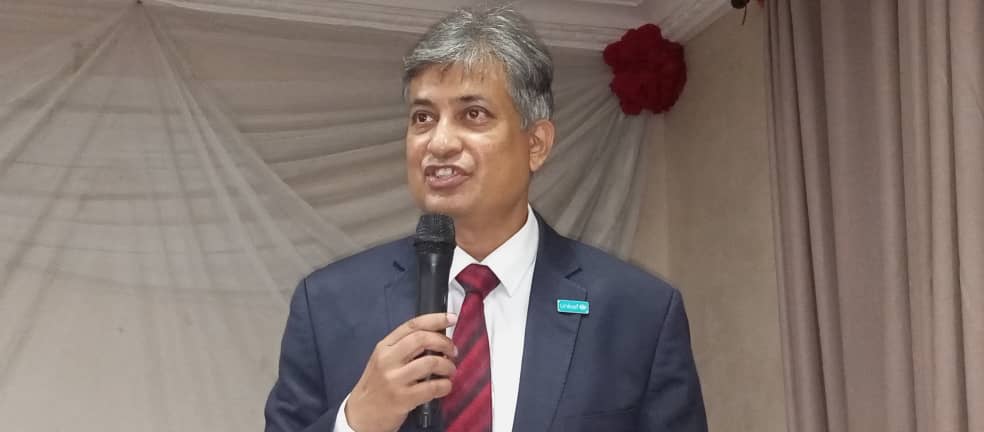
Tushar Rane said that, “We all — the government at national and sub-national levels, development partners, the media, parents, communities, traditional and religious leaders, — can achieve more by enrolling more girls in schools, and ensuring they complete their full education” .
“Therefore, we must step up our investment in the younger generation, especially girls. I urge you, the media, to continue using your platforms to advocate for increased funding and adequate public resources to the education sector, especially adequate allocation, and the release of what has been appropriated”, he stressed.
He observed that there were barriers for example, child marriage, that affect girl child education stressing however that the media must lead the advocacy to remove these barriers.
He said that, “To ensure safe, conducive, inclusive, and enabling environment for all children to learn, we must work together to: advocate for policies that promote access to education and in turn increase enrolment, retention, and transition for all children especially the girl child”.
By Yemi Kanji