News
Xenophobic Attacks: Nigerians in South Africa Live Under Constant Fear
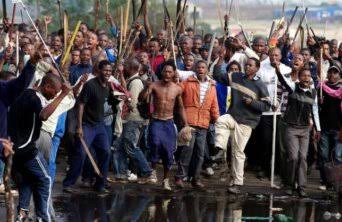
For many Nigerians residing in South Africa, each new wave of xenophobic violence brings back the same unsettling reality: their nationality alone can make them targets of mob attacks, looting, and intimidation.
Although attacks on foreign nationals are not new in South Africa, the recurring hostility toward Nigerians has continued to raise difficult questions about migration, economic frustration, and the state of African solidarity decades after the end of apartheid.
The attacks on Nigerians can be traced back to the early 2000s, when xenophobic violence on the Cape Flats claimed the lives of two Nigerians and seven other Africans. The incidents have since worsened over the years.
In 2008, Johannesburg turned into what many described as a war zone when riots led to the deaths of at least 62 people, while about 6,000 others were displaced. In April 2015 alone, attacks on Nigerian-owned property caused damage estimated at N21 million, while roughly 20 Nigerians were reportedly killed in 2016. Barely a year later, Nigerians in Pretoria West reported that five buildings, a garage containing 28 cars, and a church were looted and burnt.
More coordinated attacks followed in 2019, with natives allegedly singling out Nigerian-owned businesses across Johannesburg and Pretoria. Between 1999 and 2018, an estimated 118 Nigerians reportedly lost their lives to xenophobic violence.
Recent anti-immigrant violence in parts of Johannesburg, Durban, and Pretoria has destroyed businesses, displaced families, and heightened diplomatic tensions between Nigeria and South Africa, the continent’s two largest economies. Many of the attacks have been carried out by South Africans who blame migrants for worsening unemployment, crime, and pressure on public services.
In late April 2026, anti-immigrant groups such as Operation Dudula intensified attacks on foreigners in Johannesburg, Pretoria, and other communities. Shops owned by migrants were looted, buildings burnt, and vehicles destroyed. Two Nigerians reportedly died in police custody, while another died from injuries allegedly inflicted by personnel of the South African National Defence Force.
During the period, African migrants were allegedly asked to produce identification documents at schools, hospitals, and business premises. In one community, protesters reportedly burnt properties linked to foreigners over claims that the Igbo community crowned a traditional leader in the Eastern Cape Province.
The House of Representatives expressed displeasure over the renewed attacks and urged the Federal Government to take urgent diplomatic action. Lawmakers called for immediate evacuation plans for Nigerians willing to return home and recommended a review of bilateral relations, including a possible temporary suspension of business permits for South African companies operating in Nigeria.
The Federal Government subsequently began a voluntary repatriation programme. The Minister of Foreign Affairs disclosed that at least 130 Nigerians in South Africa requested to be flown home following the protests.
President Bola Tinubu directed Nigerian missions in South Africa to establish a crisis notification unit for affected citizens. The minister also advised Nigerians in South Africa to promptly contact South African security authorities whenever they faced threats.
South African President Cyril Ramaphosa, in a public address, condemned the violent protests and attacks, describing those behind the unrest as opportunists exploiting legitimate socio-economic grievances. He stated that individuals who stopped people, conducted searches, or checked identities without legal authority were engaging in unlawful conduct.
A former Nigerian Consul to Cameroon described the attacks as misplaced aggression rooted in deep socio-economic frustrations among sections of the black population. He argued that many black South Africans had expected to automatically gain control of businesses after apartheid, despite lacking the education and technical expertise required to manage such enterprises.
He noted that past attempts by mobs to attack mines and businesses owned by wealthy white South Africans met strong resistance, forcing attackers to shift focus to what he called soft targets, particularly black African migrants.
Meanwhile, the Director-General of the Nigerian Institute of International Affairs explained that the attacks should not be viewed solely as a Nigerian problem, as several other African nationals are also affected.
He stressed that regional and international bodies, including the African Union, the Southern African Development Community, and the United Nations, should pay closer attention because the situation poses a threat to peace and security across Africa.