News
G7 countries to provide $19.8 billion in aid to Ukraine
The Group of Seven leading economies are set to agree on more than $18 billion in aid for Ukrainian defense efforts as meetings of finance ministers close Friday, Germany’s finance minister told Bloomberg Television.
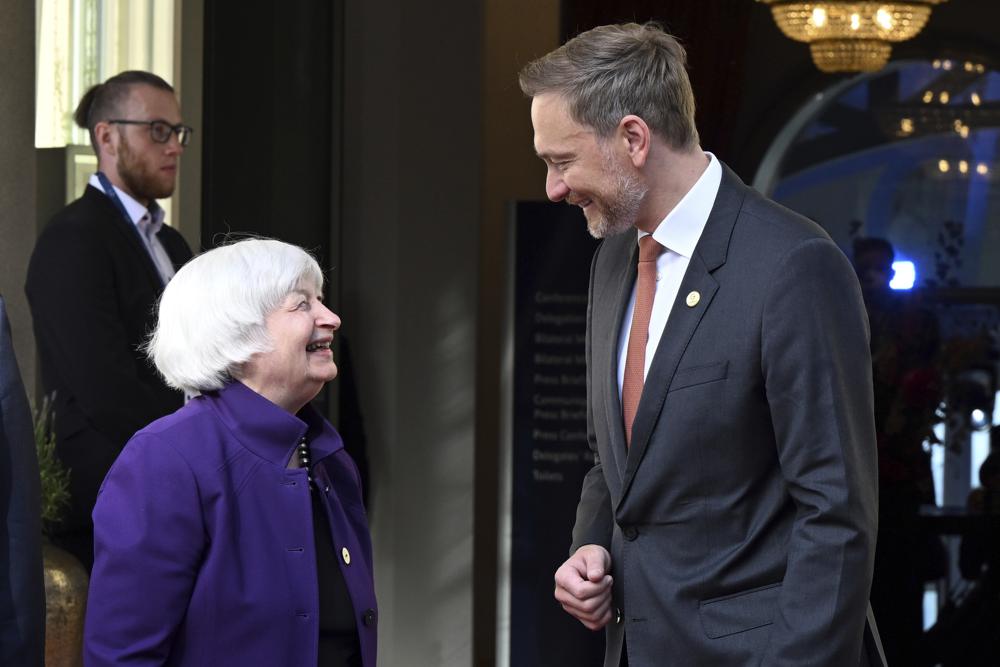
“I think it’s a very good signal that the G-7 nations are standing shoulder to shoulder with Ukraine because they are not only defending themselves, they are defending our values,” German Finance Minister Christian Lindner said in an interview with Bloomberg.
A representative from the U.S. Treasury Department declined to verify the amount allocated, and a spokesman from the German finance ministry declined to comment to The Associated Press.
U.S. Treasury Secretary Janet Yellen and other leaders spoke this week about the need for allies to put together enough additional aid to help Ukraine “get through” the Russian invasion.
“All of us pledged to do what’s necessary to fill the gap,” Yellen said Thursday as the ministers finished their first of two days of talks. “We’re going to put together the resources that they need.”
The International Monetary Fund’s latest world economic outlook says Ukraine’s economy is projected to shrink by 35% this year and next.
The finance ministers of the G-7 — which includes Canada, France, Germany, Italy, Japan, the United Kingdom and the U.S. — also have grappled with deepening inflation, food security concerns and other economic issues during their talks.
A communique marking the end of the G-7 finance ministers’ meeting addressed commitments to addressing debt distress in low-income countries, trying to ease the fallout from the coronavirus pandemic and staving off inflation rates “that have reached levels not seen for decades.”
As the finance ministers were meeting in Germany, the U.S. overwhelmingly approved its own $40 billion infusion of military and economic aid for Ukraine and its allies. The legislation was backed by every voting Democrat and most Republicans.
Other issues of concern for G-7 finance leaders touched on the need for countries to increase scrutiny and regulation of cryptocurrency and other digital assets and streamlining pandemic responses.