News
Democratic Reforms in Africa: Obasanjo, Obi Call for Overhaul of Electoral System and Judicial Integrity
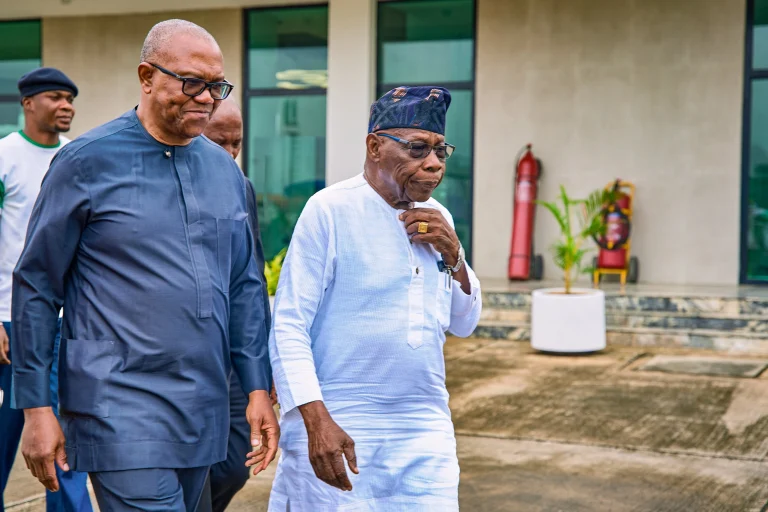
Former President Olusegun Obasanjo and presidential candidate Peter Obi have criticized the state of democracy and public institutions in Nigeria, calling for fundamental reforms to restore governance, judicial integrity, and political accountability across the African continent.
Speaking at the 2026 Goodluck Jonathan Foundation Democracy Dialogue held in Bauchi, Bauchi State, under the theme “Beyond Elections: Can Political Parties and the Judiciary Save African Democracy?”, prominent political leaders and stakeholders gathered to examine the challenges facing democratic governance in Africa.
Obasanjo, who chaired the event, argued that the Western liberal democracy model adopted by many African nations fails to align with the continent’s cultural heritage, history, and social values. He described the dominant “winner-takes-all” electoral system as counterproductive, noting that it turns political competition into outright hostility rather than collaborative leadership.
According to Obasanjo, political opposition in African states is frequently treated as an enemy to be eliminated rather than a partner in democratic progress. He emphasized the necessity of accommodating national diversity, warning against neglect of pluralism, while raising concerns over the growing influence of monetary inducements in elections and the persistent under-representation of women in governance.
Addressing the forum, Peter Obi cited systemic compromises across academic, legislative, legal, and judicial sectors as key drivers of institutional decline. Obi contrasted past judicial decisions with current electoral practices, alleging that electoral laws have been weakened and that compromised officials have enabled voting irregularities.
Also speaking at the event, the National Chairman of the Labour Party, Nenadi Usman, urged political actors preparing for future general elections to emulate the peaceful precedent set by former President Goodluck Jonathan during the 2015 presidential election. She noted that conceded defeat before final announcements preserved national stability and underscored that power should not compromise citizen safety.
The dialogue brought together notable leaders, including former President Goodluck Jonathan, former Vice President Namadi Sambo, Bauchi State Governor Bala Mohammed, former Senate President Anyim Pius Anyim, former Plateau State Governor Jonah Jang, alongside representatives of civil society organizations and traditional rulers.