News
FG Engages Chinese Firm to Revive Mambilla Power Project
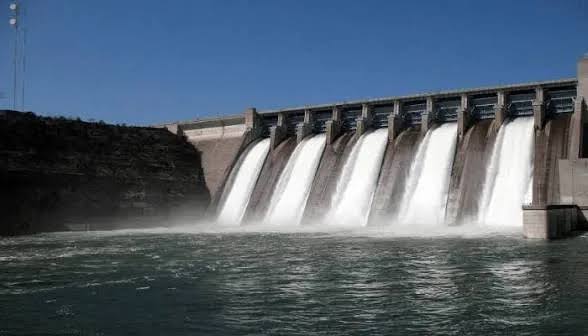
The Federal Government has opened discussions with China Energy Engineering Corporation on the Mambilla hydropower project, with phased implementation among the options being considered for the long-delayed project.
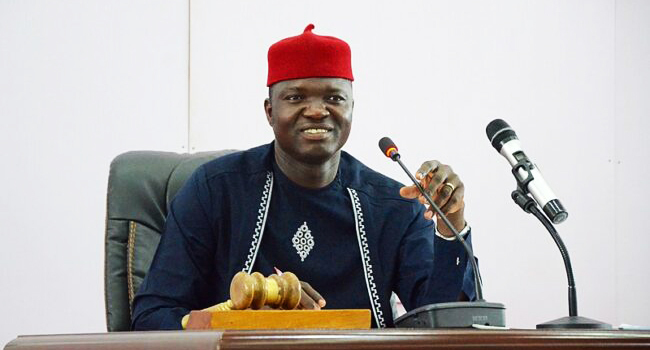
Minister of Power Joseph Tegbe disclosed this during a media parley in Abuja, saying the government had asked the Chinese company, also known as Energy China, to examine the most practical approach to delivering the project.
The development follows Nigeria’s recent victory in an International Chamber of Commerce arbitration connected to the Mambilla project, which the government says removed a major legal obstacle that had delayed progress. Tegbe said the government was considering larger hydropower projects, including Mambilla, alongside smaller hydropower schemes intended to serve agricultural corridors as part of its medium- and long-term electricity strategy.
He said the Ministry of Power had engaged Energy China and directed the company to assess available options, including whether the Mambilla project could be developed in phases. The minister also said Nigeria’s recent engagement with China had secured commitments from several Chinese companies and financiers aimed at accelerating priority projects in the power sector.
According to Tegbe, China Machinery Engineering Corporation reaffirmed its involvement in the 1.9-gigawatt Presidential Power Initiative portfolio, with the first transmission lines expected to be delivered in the first quarter of 2027. He said China National Electric Engineering Company had also progressed financing arrangements for the $116 million Zungeru evacuation project.
Tegbe added that Tebian Electric Apparatus Stock had committed to a proposed $500 million industrial park for manufacturing power equipment in Nigeria, alongside accelerated work on the Presidential Power Initiative and a three-year delivery pathway for the east-west super grid.
HengFei Cables, he said, had committed to supplying cables for the second phase of the Presidential Power Initiative and proposed establishing a cable assembly plant and training centre in Nigeria. The minister said the initiatives were intended to combine infrastructure development with local manufacturing and technical capacity while strengthening electricity supply.
Tegbe said the government’s next phase of work would concentrate on grid stabilisation along the Lagos, Enugu-Port Harcourt and Abuja-Kaduna-Kano corridors. Technical audits have also begun along the Lagos and Abuja corridors to identify weaknesses and determine where investment is required. “These first 100 days have laid the groundwork for sustained repair and stabilisation,” Tegbe said.
The Mambilla project has been delayed for years amid contractual and legal disputes. The controversy dates to a 2003 arrangement involving Sunrise Power and Transmission Company and the Federal Government for the construction of a 3,050MW hydroelectric plant in Taraba State under a build-operate-transfer model. The Federal Government maintains that the Federal Executive Council did not authorise that contract.
Sunrise commenced arbitration against Nigeria in 2017 over an alleged breach of the agreement. A settlement was later negotiated under which the government was to pay the company $200 million, but the payment was not made. Further claims subsequently arose from the settlement and the underlying project dispute.
On September 17, an ICC tribunal in Paris issued an award in Nigeria’s favour, rejecting claims brought by Sunrise. According to the Presidency, Sunrise had sought $680 million as a settlement sum and interest in connection with another arbitration in which it was claiming more than $2.7 billion in compensation and interest.
President Bola Tinubu described the decision as removing the “single biggest legal hurdle” that had paralysed the Mambilla project for years. With the arbitration hurdle reduced, the government is now seeking a practical route for moving the project forward, including discussions with Energy China over its potential phased development.