News
Iran Confirms Death of Supreme Leader Ali Khamenei
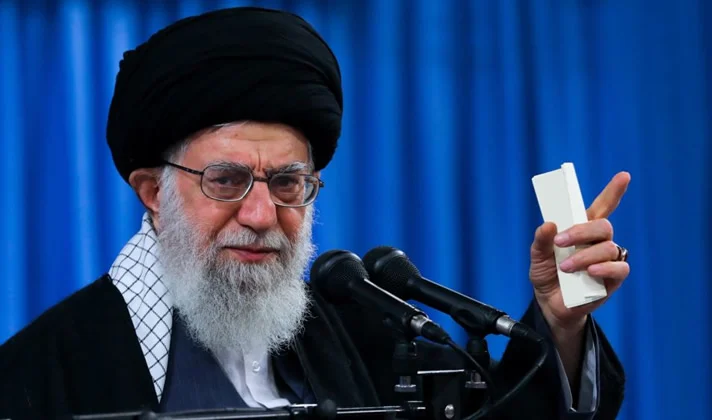
Iranian state television said on Sunday that Supreme Leader Ali Khamenei was killed following U.S.-Israeli bombardment.
The broadcaster did not provide details about the circumstances of his death.
State media also reported that 40 days of public mourning were declared in Iran.
The Supreme National Security Council said Khamenei was killed at his office early on Saturday, and that his death would mark the beginning of a “great uprising against the tyrants of the world.”
Iran’s Revolutionary Guard Corps (IRGC) said it would “decisively avenge” Khamenei’s killing, stressing that “the hand of revenge of the Iranian people will not let go of the killers of the Imam.”
The IRGC said martyrdom in the path of Islam and “Greater Iran” represents victory and proximity to the ultimate goal.
It added that Khamenei’s path “will not stop after his martyrdom, but will continue with strength and grandeur.”
The statement urged all segments of society to take part in national defense gatherings to demonstrate unity and cohesion before “the enemies of the nation and terrorists.”
It added that the killing would make the nation more determined to continue what it described as Khamenei’s illuminating path.
U.S. President Donald Trump earlier on Saturday night wrote in a post on his social media platform Truth Social that Khamenei was “dead.”
“Khamenei, one of the most evil people in History, is dead,” Trump wrote.
Trio to lead Iran during transition period after Khamenei’s death
A three-person council will temporarily govern Iran following the death of Supreme Leader Ayatollah Ali Khamenei.
The council, made up of President Masoud Pezeshkian and judiciary chief Gholamhossein Mohseni Ejei, as well as a member of the Guardian Council, will assume responsibility for the transitional phase, Iranian state media reported on Sunday.
The trio will assume Khamenei’s duties until the Assembly of Experts, a body of 88 influential clerics, nominates a successor.
Iranian law states the Assembly of Experts must pick a new supreme leader as soon as possible.
It is unclear who could succeed Khamenei, who was killed in wide-ranging strikes on Iran by the United States and Israel on Saturday.
Exiled shah’s son puts himself forward as interim Iranian leader
Reza Pahlavi, the son of Iran’s last shah and one of the country’s most prominent opposition figures in exile, has again put himself forward as Iran’s potential leader.
Pahlavi responded to the death of Iranian Supreme Leader Ayatollah Ali Khamenei in an opinion piece in the Washington Post on Sunday.
“Many Iranians, often even after facing bullets, have called on me to lead this transition.
“I am in awe of their courage, and I have answered their call,” he wrote.
“Our path forward will be transparent: a new constitution drafted and ratified by referendum, followed by free elections under international oversight.
“When Iranians vote, the transitional government dissolves.”
A democratic Iran would “transform the Middle East, turning one of the world’s most persistent sources of upheaval into a pillar of regional stability,” he wrote.
He emphasised that Iran would not “repeat the mistakes” that followed the Iraq war.
“There will be no dissolution of institutions, no power vacuum, no chaos.”
U.S. President Donald Trump declared Khamenei dead after the United States and Israel launched wide-ranging strikes on Iran on Saturday.
His death was confirmed by Iranian state media early on Sunday.
Trump told U.S. broadcaster CBS News that “there are some good candidates” to lead Iran following Khamenei’s death, but did not elaborate.
Saturday’s attacks targeted key locations where the Iranian leadership was meeting, killing top officials including the defense minister and the head of the Islamic Revolutionary Guard Corps, the Israeli military said earlier.
Pahlavi’s father, Mohammad Reza Shah Pahlavi, ruled Iran from 1941 until his overthrow in the 1979 Islamic Revolution.
Reza Pahlavi, who was designated crown prince by his father, has lived in exile in the United States for decades.