News
Nigeria Hosts Over 100,000 Refugees Amid Push for Long-Term Humanitarian Solutions
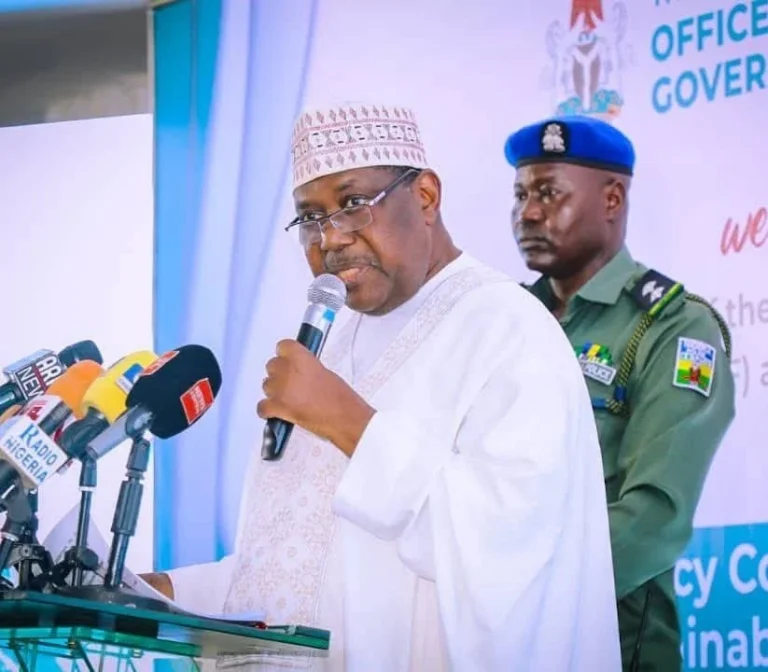
The Federal Government announced on Monday that Nigeria is currently providing shelter to more than 100,000 refugees and asylum seekers, the majority of whom have fled instability within the Lake Chad Basin region.
Secretary to the Government of the Federation, George Akume, disclosed the figures during the 2026 World Refugee Day commemoration in Abuja. While highlighting the nation’s role in hosting displaced persons from neighboring countries, he acknowledged that Nigeria continues to manage its own significant internal displacement crisis, with millions of citizens uprooted by regional insecurity, communal conflicts, and climate-related disasters.
In his address, Akume emphasized that the government is transitioning its strategy from providing short-term relief to fostering long-term self-reliance. He stated that the administration is shifting “from palliatives to pathways,” aiming to integrate humanitarian responses with development opportunities. This new approach focuses on providing displaced populations with access to agribusiness training, education, social protection programs, and sustainable livelihoods.
To support these efforts, the government plans to expand the National Social Register. This initiative is designed to ensure that aid is distributed through data-driven, transparent, and dignified channels, reaching both displaced populations and their host communities.
The Minister of Humanitarian Affairs and Poverty Reduction, Dr. Bernard Doro, and the Federal Commissioner for the National Commission for Refugees, Migrants and Internally Displaced Persons, Aliyu Tijani Ahmed, also addressed the gathering.
Both officials called for stronger international cooperation and a commitment to practical solutions. They stressed that support for displaced persons must go beyond basic sympathy and extend to ensuring fundamental rights, such as healthcare, quality education, legal identity, and meaningful participation in society.
As Nigeria continues to grapple with the complexities of regional instability and climate-induced migration, officials maintained that displaced individuals should be viewed as people with immense potential who deserve the tools necessary to rebuild their lives.
The government reiterated its commitment to international humanitarian principles as it seeks to balance the immediate safety of those seeking refuge with the need for lasting economic and social stability.