
News
No Light, No Nightlife, Fayose Blames Power Gap For Population Boom
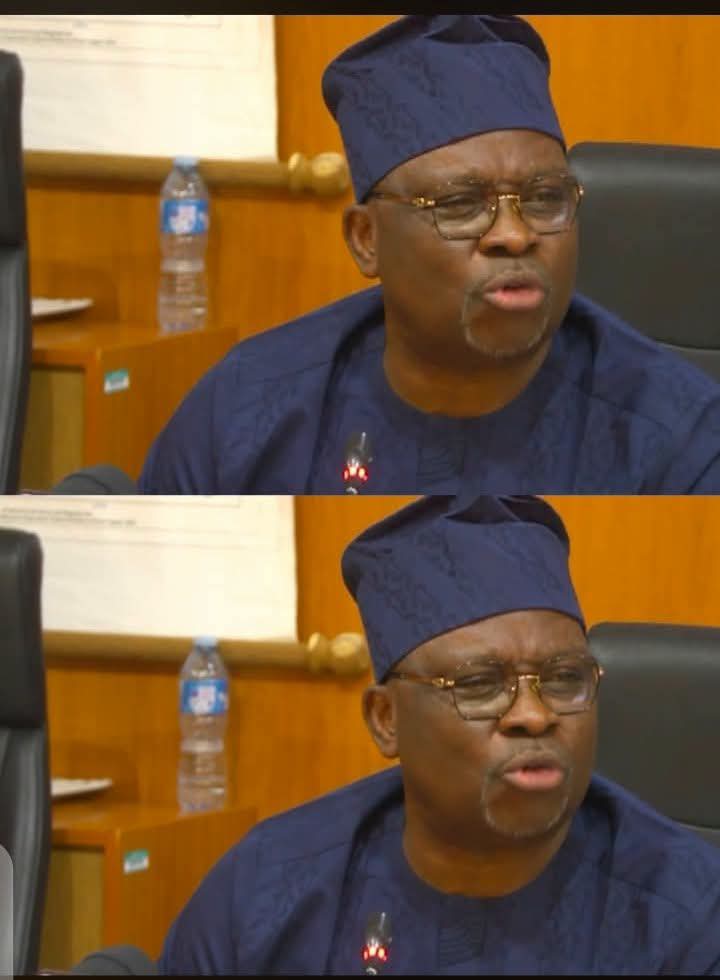
Former Ekiti State Governor and Chairman of the Rural Electrification Agency (REA) Governing Board, Ayodele Fayose, has linked Nigeria’s population growth to the lack of reliable electricity.
Fayose argued that inadequate power supply leaves many Nigerians with limited options for recreation and social engagement after nightfall.
The former Governor made the remarks during the inauguration of the newly constituted governing board of the REA by the Minister of Power, Joseph Tegbe.
Speaking at the event, Fayose said the electricity deficit had consequences beyond economic development, arguing that the absence of power was also influencing the social lives of Nigerians.
According to him, many Nigerians in communities without reliable electricity are forced to retire early to their homes after nightfall because there are few alternative activities available to them.
“When you don’t address this issue of electricity, the people have no alternative attraction. Nothing else matters to them,” Fayose said.
He added: “After 7 o’clock, it gets dark, everybody is engaging their wives, and the population simply becomes double.”
Fayose explained that the situation was largely driven by the absence of electricity-powered entertainment, businesses and other social activities that could keep people engaged outside their homes at night.
“The simple problem is because there is a lack of electricity; people go to bed early,” he said.
He added: “Their mind is simply prepared that, well, if this is the only available recreation, let me remain here.”
The former governor said improving electricity supply would consequently change the pattern of life in communities, particularly rural and underserved areas, by creating opportunities for nightlife, recreation and economic activity.
“But, when we address this electricity, there will be night life. There will be recreation outside your wife,” he said.
Fayose’s remarks highlight the broader social implications of Nigeria’s electricity-access challenge, which has traditionally been discussed mainly in terms of economic productivity, industrialisation, education, healthcare and household welfare.
Nigeria continues to face a substantial electricity-access deficit. World Bank data show that about 62.5 per cent of the country’s population had access to electricity in 2024, meaning a significant proportion of Nigerians remained without access.
The World Bank has also noted that electricity access remains particularly uneven between urban and rural communities.
The challenge is especially significant for rural communities, where the absence of electricity can constrain businesses, healthcare services, schools, agricultural processing and other productive activities.
The REA is the Federal Government’s agency responsible for expanding electricity access to unserved and underserved communities.
Established originally under the Electric Power Sector Reform Act of 2005 and further backed by the Electricity Act 2023, the agency implements programmes involving grid extension, mini-grids and standalone renewable-energy solutions.
The agency’s mandate is not limited to connecting households. Its stated objective includes using electricity access to improve economic opportunities and quality of life in rural, unserved and underserved communities.
In recent months, the agency has intensified its focus on renewable and decentralised electricity solutions.
Among its programmes are the Rural Electrification Fund, Nigeria Electrification Programme, Distributed Access through Renewable Energy Scale-up initiative, Energizing Education Programme and Energizing Economies Initiative.
In June 2026, the REA commissioned a 505kWp interconnected solar mini-grid project serving five communities in Epe Local Government Area of Lagos State. The project was designed to provide electricity to households, small businesses, public institutions and productive users.
The World Bank has similarly identified decentralised renewable-energy solutions such as solar mini-grids and standalone solar systems as important tools for reaching remote communities.
Its Nigeria Electrification Project, implemented with support from the REA, helped establish 125 mini-grids and facilitated the sale of more than one million solar home systems, providing electricity access to more than 5.5 million Nigerians.
Fayose’s emergence as chairman of the REA governing board followed President Bola Tinubu’s appointment of 26 people to the boards and management of 10 Federal Government agencies and commissions in July 2026.
Under the arrangement, Fayose is to lead the REA board alongside Ahmadu Abubakar and Ilyasu Ibrahim Makinta as members and non-executive directors. The agency’s Director-General, Abba Abubakar Aliyu, and three executive directors also form part of the governing board.
The appointment placed the former two-term Ekiti governor at the head of an agency with responsibility for one of the Federal Government’s major objectives in the power sector: expanding electricity access to Nigerians who remain outside or inadequately served by the national electricity network.
Fayose’s comments therefore frame the electricity challenge not only as an infrastructure and economic problem but also as a social-development issue.
His argument is that reliable electricity could extend the productive and social hours of communities beyond sunset, allowing businesses, entertainment centres, recreational facilities and other activities to operate at night.
While Fayose’s assertion that inadequate electricity is directly driving population growth was presented as his observation rather than as a demographic finding, his broader point underscores the extent to which access to electricity can shape everyday life.
Nigeria’s population was estimated by the World Bank at more than 237 million in 2025, with an annual population growth rate of about 2.1 per cent.
For the REA, the challenge is therefore to ensure that electricity reaches not only major cities and commercially attractive locations but also rural and underserved communities where the absence of power continues to limit economic and social opportunities.
Fayose is expected to work with the agency’s management and other members of the governing board as the Federal Government seeks to accelerate rural electrification and expand access to affordable and sustainable electricity across the country.
Got it — here’s the *first paragraph rewritten for print* with *headline options + letter counts* (spaces not counted):
*Rewritten First Paragraph*
*


