News
Police Call for Stronger Community Collaboration to Combat Crime in Kwara
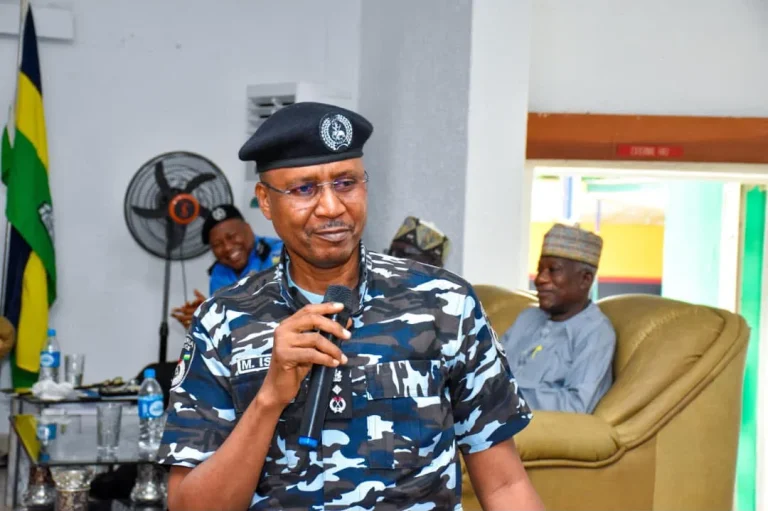
The Nigeria Police Force has emphasized the need for a deeper partnership between security agencies and the public to enhance community policing and intelligence gathering across Kwara State.
This call was made by the Deputy Inspector-General of Police (DIG) in charge of Training and Development, Isyaku Mohammed, during an operational inspection tour of the Kwara State Police Command in Ilorin on Friday. During his visit, the DIG held a series of strategic meetings with the command’s management, divisional officers, and key local stakeholders to review the state’s current security architecture.
“Community policing, timely intelligence sharing, and mutual trust between the police and the public remain essential to preventing crime and sustaining peace,” Mohammed stated during a forum held at the Police Officers’ Mess. He noted that the visit served as a platform to assess the security situation on the ground while aligning local operations with the policy directives of the Inspector-General of Police.
The event featured contributions from various stakeholders, including government representatives, security experts, and community leaders. Retired Assistant Inspector-General of Police Adisa Bolanta underscored the necessity of public cooperation, noting that effective policing is a collective responsibility that cannot succeed in isolation.
Representing the state government, Muyideen Aliyu, the Senior Special Assistant on Security to Governor AbdulRahman AbdulRazaq, praised the command’s dedication and reiterated the government’s commitment to providing the necessary support to ensure public safety.
The forum brought together a diverse group of participants, including religious leaders, members of the Vigilante Group of Nigeria, and the Police Community Relations Committee. To conclude the visit, the DIG presented special recognition awards to Governor AbdulRazaq and retired AIG Bolanta for their significant contributions to security initiatives within the state.