News
Int’l Day of the Girl-Child: Edo Govt Reaffirms Commitment to Removing Barriers to Education, Dev
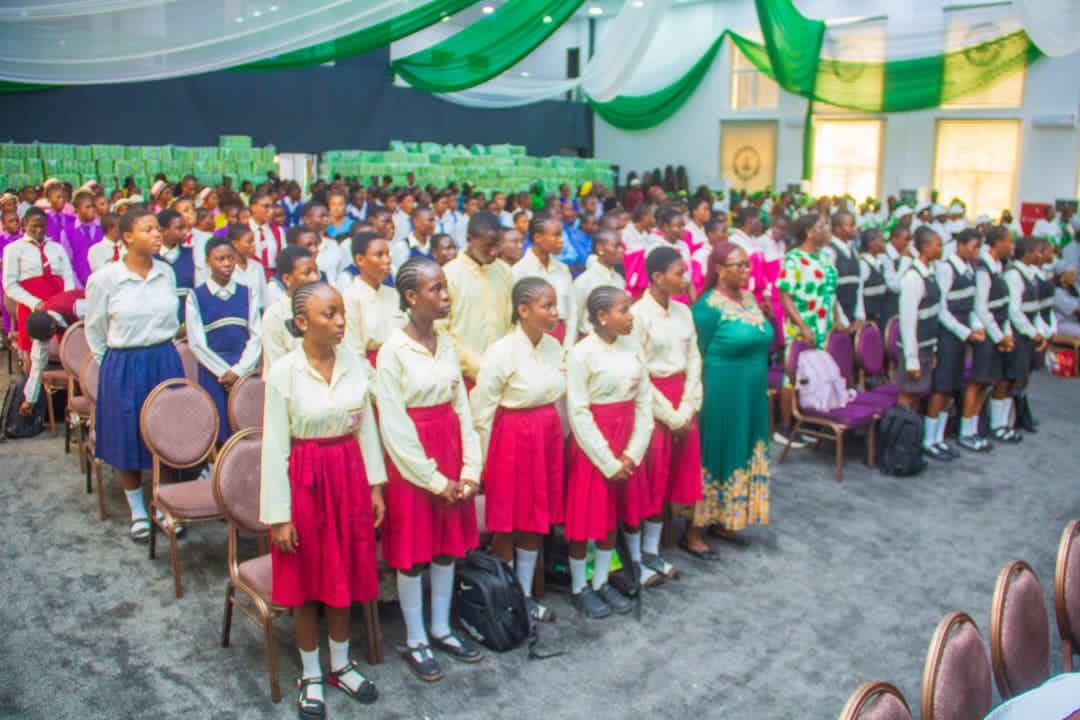
In commemoration of the International Day of the Girl-Child, the Edo State Government, through the Office of the First Lady, has reaffirmed its commitment to eliminating all barriers hindering the growth, education and empowerment of the girl child.
The assurance was given by the Coordinator, Office of the First Lady, Mrs. Edesili Okpebholo Anani, at the New Festival Hall, Government House, Benin City, during activities marking the day organized by her Office.
Addressing stakeholders and participants at the programme, the Coordinator charged parents to secure their children’s future by building self-worth in the girl-child, encouraging her to dream beyond societal constraints such as early marriage, and investing deliberately in her rights and development.
Emphasizing that marriage, though a noble institution, must come at the right time, the Coordinator noted that the Constitution stipulates 18 years as the minimum age for marriage and therefore urged parents to channel their efforts towards educating the girl child to enable her to attain her full potential.
She reiterated that the girl child is entitled to fundamental rights, including the rights to education and freedom as guaranteed by the Constitution, adding that awareness of these rights is crucial to her proper development. She stressed that women remain pivotal to nation-building and represent the future of the nation. “The girl child has value, her voice matters and she must be heard,” she asserted.
Corroborating her position, the Wife of the Secretary to the State Government, Barr. Nimata Umar Ikhilor, described the empowerment of the girl child as a necessity that can never be overstated. She said the erroneous notion of the girl child as a wasted investment is no longer tenable, noting that women have continued to demonstrate their capacity to lead and contribute meaningfully to society, while referencing Hon. Maria Edeko as proof that empowering one girl child empowers an entire community of women.
She assured that the present administration is deliberately dismantling all structural and cultural obstacles impeding the advancement of the girl child in the state.
In her keynote address, Former Deputy Speaker, Edo State House of Assembly, Hon. Maria Edeko, emphasized the need to sustain advocacy for the girl child beyond annual celebrations.
She defined a child as any person 18 years and below, as provided by the Constitution of the Federal Republic of Nigeria, the United Nations (UN) Convention on the Rights of the Child, and other international and regional treaties domesticated in Nigeria. She noted that giving out a child below 18 years in marriage constitutes an offence.
On the consequences of early marriage, she highlighted health risks including Vesicovaginal Fistula (VVF) due to undeveloped reproductive systems, truncation of education, lack of economic empowerment, and increased vulnerability to domestic abuse. She urged girls to prioritize education, self-dignity and protection from drug abuse and teenage pregnancy.
Speaking on investment in girls’ rights, she stressed the need for access to free basic education, retention in school, provision of scholarships and early grooming for leadership, noting that women’s low representation in governance limits their ability to influence decisions affecting them and calling for deliberate inclusion.
She concluded by commending the Office of the First Lady of Edo State and the First Lady of the Federal Republic of Nigeria, Senator Oluremi Tinubu, for initiatives promoting the welfare of the girl child.
The female students present, including Obukhowo Fortune from Edo National College, Iguobazuwa; Uwumarogie Osahenoma from Iyekogba Grammar School; and Ojo Ruth from Umelu Secondary School, expressed gratitude for the insightful programme, appreciating the Coordinator for her commitment to the development and empowerment of the girl child, and pledged to remain focused on their education.
The programme, which also featured lectures, drama and choreographic presentations, menstrual hygiene education, among others, climaxed with renewed commitment by stakeholders to protect the rights of the girl child, promote her education and create an enabling environment for her to thrive.