News
Rivers State Budget Stalled: Unfulfilled Political Agreements Delay N1.85tn Appropriation Bill
The passage of Rivers State’s N1.854 trillion 2026 Appropriation Bill remains stalled in the House of Assembly one month after its formal submission by Governor Siminalayi Fubara, driven by underlying political disputes and unfulfilled agreements between the executive and legislative arms.
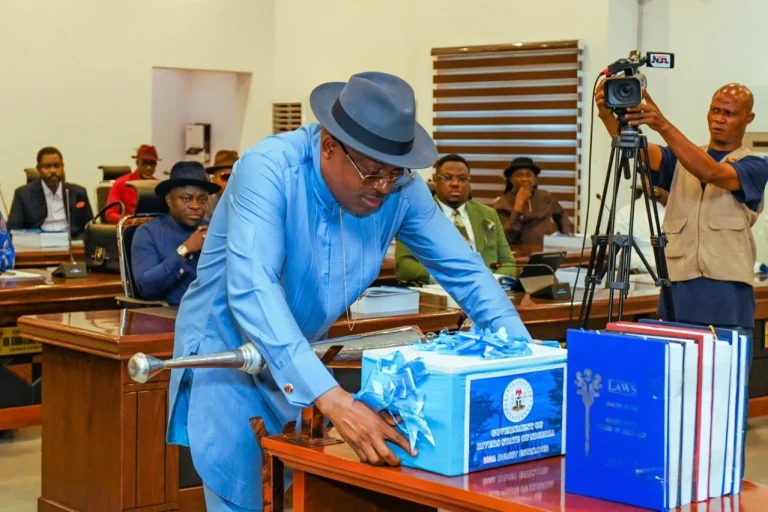
Governor Fubara presented the proposal, titled the *”Budget of Resilience for Growth and Development,” to the Martin Amaewhule-led Assembly on July 10, 2026. Despite assurances from legislative leaders that the proposal would receive accelerated consideration to offset initial presentation delays, little public progress has been recorded regarding committee hearings or budget defence proceedings.
The delay stems from unresolved political bargains reached prior to the budget presentation. Sources within the Assembly indicate that lawmakers allowed the bill’s presentation based on specific commitments regarding legislative benefits, operational funding, and constituency project allocations, which remain largely unfulfilled by the executive.
Addressing the issue during a recent media briefing, the Minister of the Federal Capital Territory, Nyesom Wike, noted that the executive’s failure to release operational funds for the State House of Assembly Service Commission and meet secondary obligations contributed directly to the current legislative impasse. Wike asserted that while political reconciliation efforts continue, full budget passage will require resolving these outstanding administrative and political commitments.
Civil society groups and public analysts have expressed growing concern over the economic impact of the impasse. Obinna Ebogidi, Convener of the Rivers Peace Initiative, and Oscar Imeabe, President of the South-South Youths Initiative, urged both the executive and legislature to prioritize public interest over political friction, warning that prolonged legislative delays threaten key infrastructure projects, public service delivery, and overall economic stability in the state.