News
Senate Prepares for Historic Vote on State Police Bill Transmitted by President
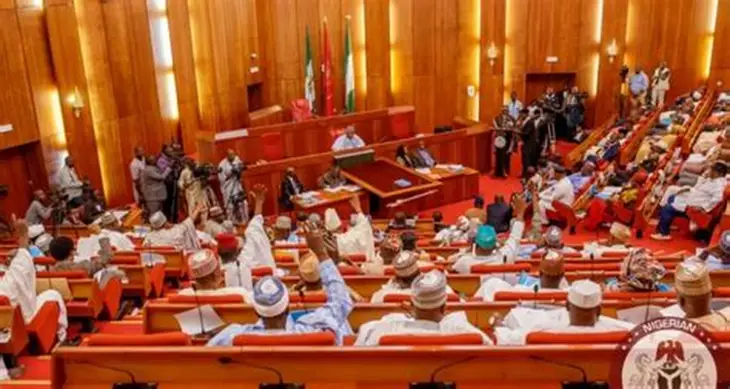
The National Assembly is set to conduct a pivotal vote on the establishment of state-level policing, marking a potential turning point in Nigeria’s security architecture. The Senate is scheduled to debate the Constitution Alteration Bill today, a landmark piece of legislation transmitted by President Bola Tinubu to provide a legal framework for decentralizing the nation’s security forces.
Senate President Godswill Akpabio has issued an urgent call for full legislative attendance, stressing the significance of the exercise. Describing the bill as a long-awaited reform, Akpabio emphasized that the move is designed to move beyond the centralized model that has been in place since 1960. He noted that the proposed amendment aims to strengthen grassroots security by integrating local insights from traditional institutions, community leaders, and youth groups, while also incorporating strict safeguards to prevent the potential abuse of power by state authorities.
The push for state police has gained momentum as state governors continue to lobby for greater constitutional authority over security operations within their jurisdictions. A recent strategic meeting held by the Nigeria Governors’ Forum highlighted the necessity of guaranteed funding arrangements and clearer command structures for the proposed services. While current regulations designate governors as the chief security officers of their states, their practical control over police operations remains limited under the existing federal command structure.
The legislative process is being treated with urgency, with the Senate Leader, Senator Opeyemi Bamidele, reminding lawmakers that a two-thirds majority is constitutionally required for the amendment to pass. Should the bill secure the necessary support in both the Senate and the House of Representatives, it will then require ratification by at least 24 state Houses of Assembly before it can be sent to the President for final assent.
The proposed reform has elicited diverse reactions from security experts. Proponents argue that localizing the police will drastically improve intelligence gathering, reduce response times to criminal activities, and foster greater community trust. Conversely, some retired security chiefs have voiced concerns regarding the potential for political interference. They have called for robust oversight mechanisms, such as independent commissions, to ensure that state police services operate professionally and are not utilized as tools for personal or political agendas.
To maintain functionality alongside the existing federal police, experts suggest that jurisdictions must be clearly defined. Under this dual system, federal agencies would likely retain responsibility for issues that transcend state boundaries, such as cybercrime, kidnapping, and human trafficking, while state services would focus on localized law enforcement and internal security.
Following the death of Hon. Yaya Tongo, a member of the House of Representatives from Gombe State, the Senate suspended its plenary session on Tuesday in a moment of tribute. Lawmakers are now expected to reconvene today to proceed with the high-stakes constitutional amendment.