News
Tinubu Scaring Investors, Obi Raises Alarm Over FDI Figures
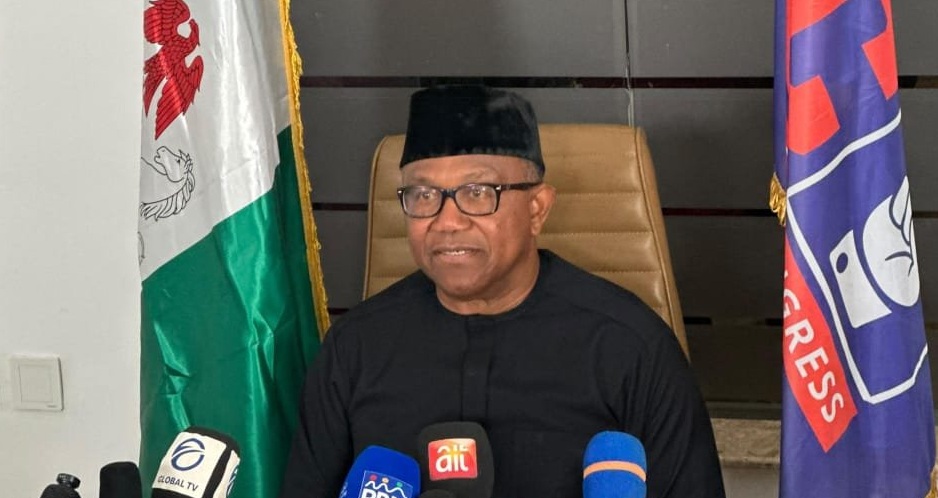
The presidential candidate of the Nigeria Democratic Congress (NDC), Peter Obi, has criticised President Bola Tinubu’s administration over its handling of the economy, alleging that government policies and institutional challenges are discouraging foreign investors from bringing capital into Nigeria.
Obi argued that the government’s celebration of macroeconomic stability was inconsistent with concerns raised by the United States government about the country’s investment climate.
In a statement issued on Wednesday titled ‘Scaring Investors While Celebrating Macroeconomic Stability,’ the former Anambra State governor cited corruption, insecurity, regulatory inconsistencies, weaknesses in the judicial system, port congestion and unreliable electricity as factors affecting investor confidence.
He maintained that the issues highlighted in the 2026 Nigeria Investment Climate Statement by the US Department of State should prompt urgent action by the Nigerian government.
According to Obi, the report also warned prospective investors about the risks of arbitrary detention, travel restrictions and the use of immigration enforcement in disputes involving foreign businesses.
He argued that the findings required a response from the Presidency, including investigations into the concerns raised and measures to address the problems identified.
Obi accused the All Progressives Congress (APC)-led administration of failing to respond adequately to the challenges, describing the situation as evidence of what he considers shortcomings in the government’s economic management.
“As the APC-led government continues in their delusional celebration of Nigeria’s macroeconomic stability, the warning from the United States Government to prospective investors on inherent risks in Nigeria further affirms the general and correct assessment that President Bola Tinubu-led government is incompetent, ineffective and corrupt,” he said.
The NDC candidate added that Nigeria needed to protect its reputation among international trading partners, particularly as the country seeks to attract more foreign direct investment (FDI).
Obi Questions Nigeria’s Foreign Investment Figures
Obi also expressed concern about the composition of capital inflows into Nigeria, arguing that the country was attracting insufficient long-term foreign investment relative to the size of its economy and market potential.
Citing figures for the first quarter of 2026, he said Nigeria recorded $10.37 billion in total capital importation during the period.
Of that amount, he stated that foreign direct investment accounted for $135.08 million, representing approximately 1.3 per cent of the total. Foreign portfolio investment, meanwhile, stood at about $9.86 billion, or 95.1 per cent, with loans and other capital sources accounting for the remainder.
Obi argued that the figures raised questions about the quality and composition of capital entering the country, particularly the relatively small share attributed to direct investment.
Foreign direct investment generally involves a lasting interest in businesses or productive assets, while portfolio investment typically involves financial assets such as shares and bonds. The two categories can therefore have different implications for long-term economic activity.
The former governor said the government’s claims of improving macroeconomic conditions should be accompanied by efforts to address the obstacles confronting businesses and prospective investors.
“It is paradoxical that while the Tinubu administration is celebrating macroeconomic stability, it is unwittingly scaring away foreign investors. What a shame,” he said.
US Report Raises Concerns About Business Conditions
Obi’s criticism centred on the issues he said were identified in the US investment climate assessment, including regulatory uncertainty, security challenges, judicial weaknesses and delays in the movement of cargo through Nigeria’s traditional seaports.
He cited the report’s concerns about cargo dwell times exceeding 20 days at the Apapa and Tin Can Island ports, despite improvements associated with the Lekki Deep Seaport.
According to the figures he quoted, the Lekki facility handled $9.6 billion in trade in 2025 and operated at about 50 per cent capacity.
Obi maintained that addressing such operational and institutional challenges was necessary to improve Nigeria’s appeal to international businesses.
He also argued that a government seeking greater foreign investment should investigate adverse assessments of the country’s business environment and take practical steps to resolve the issues identified.
The NDC candidate concluded by expressing confidence that Nigeria could improve its economic prospects through changes to governance and the business environment.
“A New and Productive Nigeria is possible and Nigeria will be OK,” he said.