
News
Russia threatens to stop supplying gas if not paid in roubles
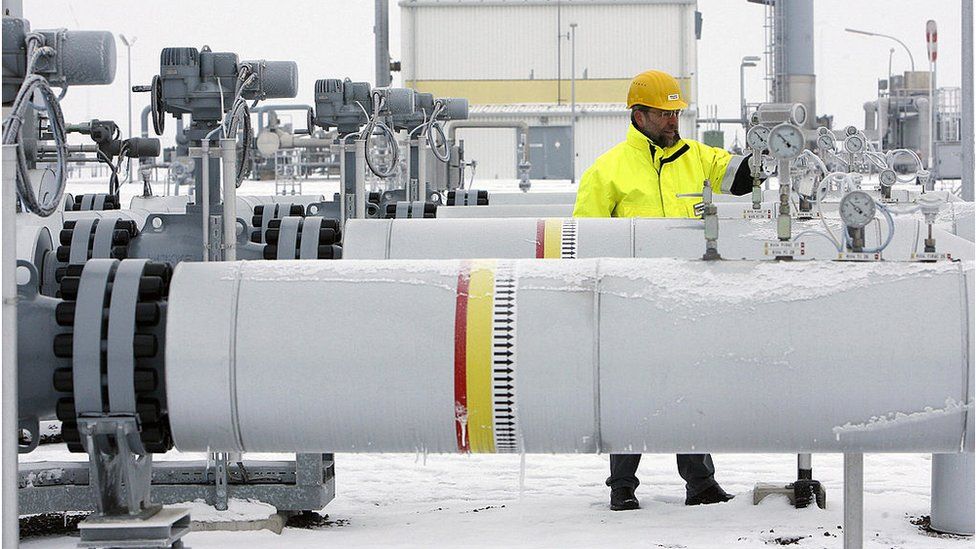
“Nobody sells us anything for free, and we are not going to do charity either – that is, existing contracts will be stopped,” the Russia president said.
Mr Putin’s demand is being seen as an attempt to boost the rouble, which has been hit by Western sanctions.
Western companies and governments have rejected Russia’s demands to pay for gas in roubles as a breach of existing contracts, which are set in euros or US dollars.
Since Russia invaded Ukraine, Western nations have issued economic and trading sanctions on Russia, but the European Union has not placed bans on oil or gas, unlike the US and Canada, as its member nations rely heavily on it.
Mr Putin said the switch to roubles was meant to strengthen Russia’s sovereignty, and it would stick to its obligations on all contracts, if Western nations obliged.
Germany said the change announced by Mr Putin amounted to “blackmail”.
At a news conference, German Economy Minister Robert Habeck said he had not yet seen the new decree signed by Mr Putin.
“With regard to the threat, demand or consideration – one doesn’t know what to call it anymore – to be made to pay in roubles, it is crucial for us that the contracts are respected,” he said.
Separately, German Chancellor Olaf Scholz said German companies would continue to pay for Russian gas using euros as stipulated in contracts.
Gazprombank will then convert this into roubles and transfer it to Gazprom.
France’s economy minister Bruno Le Maire declined to comment on technical details linked to the latest Russian demands for rouble payment.
Analysts say making nations pay in roubles for gas will support the country’s currency, which fell sharply after the invasion but has begun to recover.
The announcement comes after Moscow appeared to soften its stance on Wednesday over demanding rouble payments, saying they would be introduced gradually.
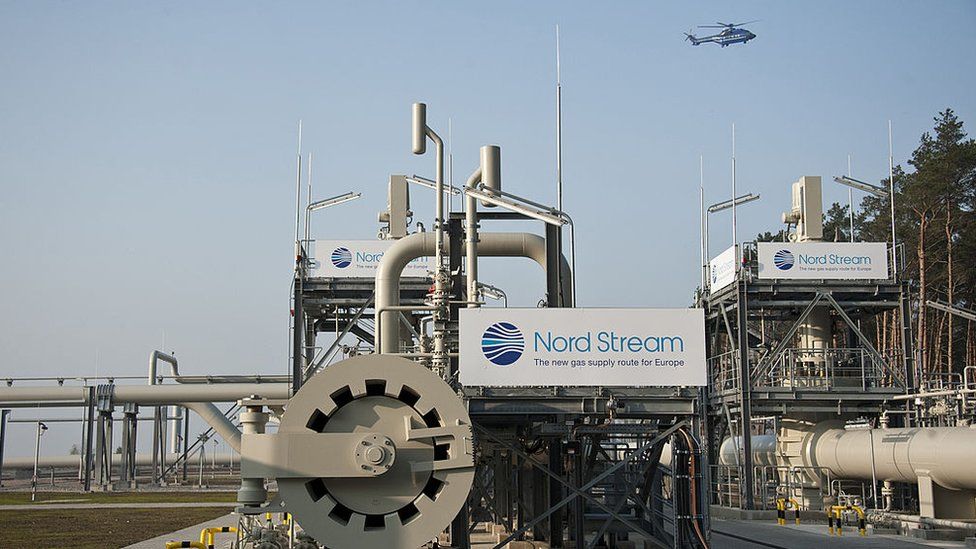 IMAGE SOURCE,AFP
In preparation for gas supply disruption, Germany and Austria have triggered emergency plans amid a payments stand-off with Russia.
Under an existing gas emergency plan, the “early warning phase”, which both Germany and Austria have begun, is the first of three steps designed to prepare the country for a potential supply shortage. In its final stage, the governments would bring in gas rationing.
Elsewhere, Bulgaria, which gets 90% of its gas via imports from Russian company Gazprom, has opened a tender for underground drilling as part of plans to almost double the country’s gas storage capacity and prepare for any supply disruptions.
While the UK would not be directly impacted by supply disruption, as it imports less than 5% of its gas from Russia, it would be affected by prices rising in the global markets as demand in Europe increases.
The UK government said it was not planning to pay for Russian gas in roubles.


