News
SERAP Calls on Tinubu to Investigate ₦78.8bn Cash Transfer Scandal
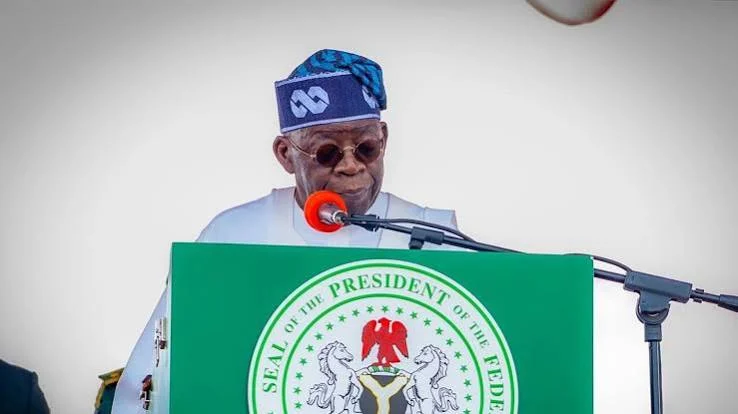
The Socio-Economic Rights and Accountability Project (SERAP) has asked President Bola Tinubu to start an immediate investigation into the suspected misuse, mismanagement, and lack of accountability related to over ₦78.8 billion set aside for the Federal Government’s cash transfer programs.
In a letter dated September 5, 2026, and signed by its Deputy Director, Kolawole Oluwadare, SERAP urged the President to instruct the Ministry of Humanitarian Affairs and Poverty Reduction, the National Cash Transfer Office (NCTO), and the National Social Safety Nets Coordinating Office (NASSCO) to explain how they used these funds.
The organization pointed out that these allegations were highlighted in the 2024 Annual Report from the Auditor-General of the Federation, which was released on August 7, 2026.
According to SERAP, the Auditor-General’s report covers different periods between January 2023 and December 2024 and raises serious questions about how funds meant for vulnerable Nigerians are managed.
They specifically called on the Federal Government to make public all records and audits related to ₦33.751 billion in cash transfers made by the NCTO to 3,295,207 households across 35 states in 2023.
SERAP stated that the NCTO did not provide enough proof that beneficiaries actually received their funds and also failed to supply REMITA records necessary to verify these transactions.
Additionally, the organization urged the government to explain ₦36.744 billion that was reportedly disbursed without a prepayment audit, ₦4.616 billion in spending without proper supporting documents, ₦350.182 million spent on enrolling unbanked beneficiaries, ₦89.511 million for store purchases, and ₦17.422 million advanced to staff for diesel expenses.
It also called on the President to look into ₦76.24 billion in suspicious and unaccounted expenses at the NCTO, along with another ₦2.55 billion at NASSCO.
SERAP stated that any official found responsible should face penalties and legal action if there is enough proof, no matter their rank or position.
The organization also requested that any public funds identified as misused, improperly applied, or paid to ineligible or fake recipients be recovered and sent back to the Treasury.
They urged the government to share details about the recovered funds, including how much was retrieved, when it happened, which institution was responsible, and the Treasury account where the money was deposited.
SERAP further asked for a report showing state-by-state data on beneficiaries, amounts given out, payment dates, failed or reversed transactions, amounts returned to the Treasury, and costs related to managing the cash transfer program.
The organization said that the Federal Government should also match payments with the National Social Register and National Beneficiary Register. They should independently check the identity and eligibility of recipients to find duplicates, fakes, deceased individuals, or anyone else who shouldn’t have received assistance.
SERAP gave the Federal Government seven days from receiving or seeing this letter to respond to its requests. They warned that if there is no response, they might consider taking legal steps, including actions before the ECOWAS Court and the World Bank Accountability Mechanism.
The organization emphasized that transparency and accountability are crucial since these funds are meant to support some of Nigeria’s poorest and most vulnerable citizens.
They insisted that failing to properly track these funds could damage public trust in Nigeria’s social protection system and increase the risk of money intended for needy households being lost, misused, or given to people who don’t qualify.