News
State Police Bill Passes House Amid Opposition Walkout Over Voting Procedure
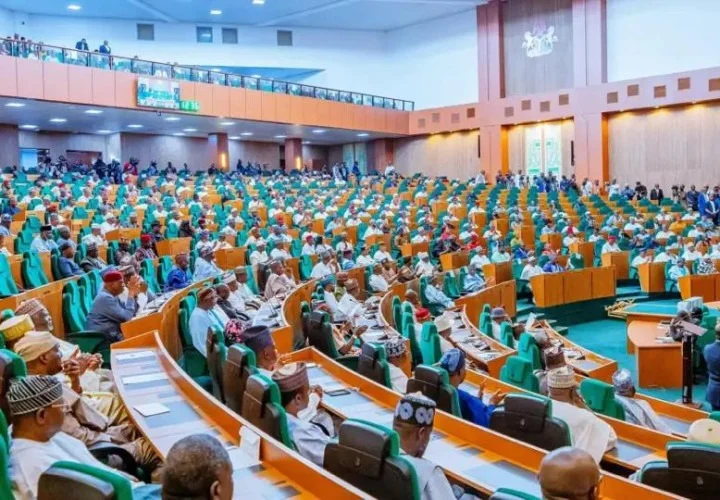
The House of Representatives on Thursday approved the Constitution Alteration Bill seeking to establish State Police across Nigeria, following a chaotic session marked by a walkout of opposition lawmakers over alleged procedural breaches.
The executive bill, submitted by President Bola Tinubu to decentralize law enforcement and address persistent insecurity nationwide, secured the mandatory two-thirds majority required for constitutional amendments.
The session turned contentious during the Committee of the Whole when Speaker Tajudeen Abbas opted for a single voice vote instead of conducting the customary clause-by-clause consideration of the 26-item legislation.
Before taking the vote, Speaker Abbas announced that 311 lawmakers supported the measure, exceeding the 240-vote threshold needed in the 360-member assembly. According to the Speaker, the supporting group comprised 211 All Progressives Congress members, 65 opposition members present in the chamber, and 35 lawmakers participating virtually.
Attempts by Minority Leader Frederick Agbedi to raise points of order regarding the procedure were overruled, prompting members of the minority caucus to stage a walkout in protest.
Briefing reporters after exiting the chamber, minority caucus spokesman Afam Ogene criticized the voting process, asserting that Section 9(2) of the 1999 Constitution and House Standing Orders mandate individual consideration and recorded voting for each clause of a constitutional amendment.
While reaffirming its support for state police in principle, the minority caucus warned against creating an unfunded mandate. In a formal letter to the Speaker dated July 22, 2026, the caucus recommended reallocating 15 percent of the Federal Government’s Federation Account share to state governments to help cover local policing costs.
Presenting the report earlier, Deputy Speaker Benjamin Kalu defended the bill as a vital step toward bringing policing closer to local communities and enhancing intelligence gathering. He noted that detailed operational frameworks, including recruitment, funding, and oversight, would be addressed through subsequent legislation.
To complete the constitutional amendment process, the bill must be harmonized with the Senate version, approved by at least 24 of Nigeria’s 36 State Houses of Assembly, and receive presidential assent.