News
Christian Council Calls for Review of FRSC Bill Penalizing Preaching and Hawking on Commercial Buses
The Christian Council of Nigeria (CCN) has appealed to President Bola Tinubu and the National Assembly to reconsider specific provisions within the newly passed Federal Road Safety Corps (FRSC) Act (Amendment) Bill, 2026. The religious body warned that certain components of the proposed legislation risk infringing upon constitutional freedoms and disproportionately punishing economically vulnerable citizens.
The council’s concerns center on a clause in the amendment that mandates a ₦50,000 fine for individuals caught hawking, trading, or preaching inside commercial vehicles. In a statement signed by its General Secretary, Rt. Rev. Evans Onyemara, the CCN noted that grouping religious evangelism with commercial operations raises serious human rights questions. While affirming its support for policies that enhance highway safety and reduce traffic accidents, the council maintained that public safety measures should not compromise fundamental liberties.
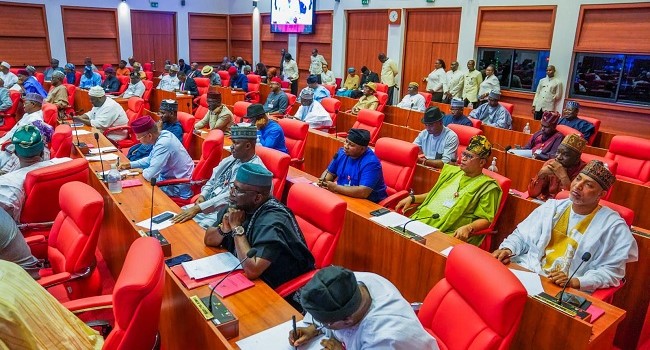
The legislative amendment passed by the Senate introduces stricter penalties across the transport sector, including a ₦100,000 fine for traffic light violations alongside the ₦50,000 penalty for in-bus activities. The CCN argued that transit preaching has long been a peaceful medium for sharing messages of faith and encouragement with consenting commuters, and cautioned that restricting it could be perceived as an unfair targeted limitation on religious expression.
Furthermore, the council criticized the financial penalties leveled against street traders and hawkers, stating that the law penalizes survival strategies driven by widespread economic hardship, unemployment, and inflation. Rather than implementing punitive fines, the CCN suggested the government establish designated trading zones and implement sustainable economic empowerment programs. The body urged the presidency and lawmakers to subject the bill to broader public consultations involving faith-based organizations, transport unions, and civil rights groups before it is finalized into law.