News
FG Forms Team to Curb Rejection of Agricultural Exports
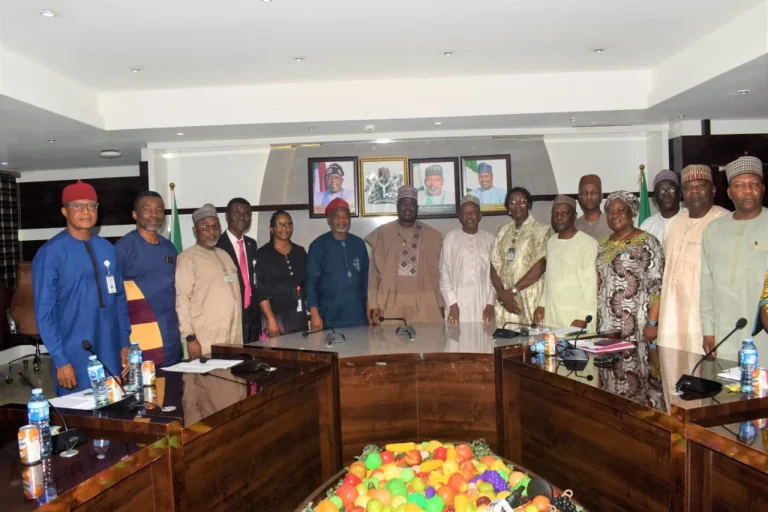
The Federal Government has inaugurated a multi-sectoral Technical Working Group (TWG) on Agricultural Produce Residue Standards to tackle the persistent international rejection of Nigeria’s agricultural exports.
The move targets recurring non-compliance issues with Maximum Residue Limits (MRLs)—the highest level of pesticide residue legally tolerated in food—as well as other strict sanitary and phytosanitary (plant health) import guidelines.
Speaking at the inauguration ceremony in Abuja on Monday, the Minister of State for Agriculture and Food Security, Senator Aliyu Abdullahi, stated that the initiative is designed to overhaul national food safety systems and restore the competitiveness of Nigerian produce in global markets. He noted that export rejections have caused severe economic setbacks, eroded market confidence, and resulted in major financial losses for farmers and agribusinesses.
The newly formed committee brings together agricultural experts, regulatory bodies, researchers, and private sector partners. They have been tasked with designing practical, science-based solutions to enforce safe pesticide application practices and secure access to premium international buyers.
The ministry’s Permanent Secretary, Marcus Ogunbiyi, emphasized that agriculture remains a core pillar of the national economy. He warned that failing to address international residue benchmarks directly threatens rural livelihoods, employment generation, and foreign exchange earnings.
Led by Chairman Lateef Oladimeji, the committee’s immediate mandate includes reviewing current food safety policies, harmonizing local guidelines with global benchmarks, and boosting laboratory capacity for rigorous chemical monitoring. The technical group is expected to submit its comprehensive assessment and operational roadmap to the ministry within two months.